"A revelatory new book." -The Nation
"I hope every person on earth reads The United States of War." - War Is a Crime "A sweeping indictment of the nation’s heavily militarized foreign policy, including the nearly incalculable costs, financial as well as moral, that have been exacted both at home and abroad.... The United States of War immediately becomes the definitive account of the history of U.S. overseas bases and their role in the history of American militarism." –Washington Report on Middle East Affairs |
The United States of War:
|
My new book is now available at all major bookstores, online and off. For more information, visit: The United States of War: A Global History of America's Endless Conflicts, from Columbus to the Islamic State
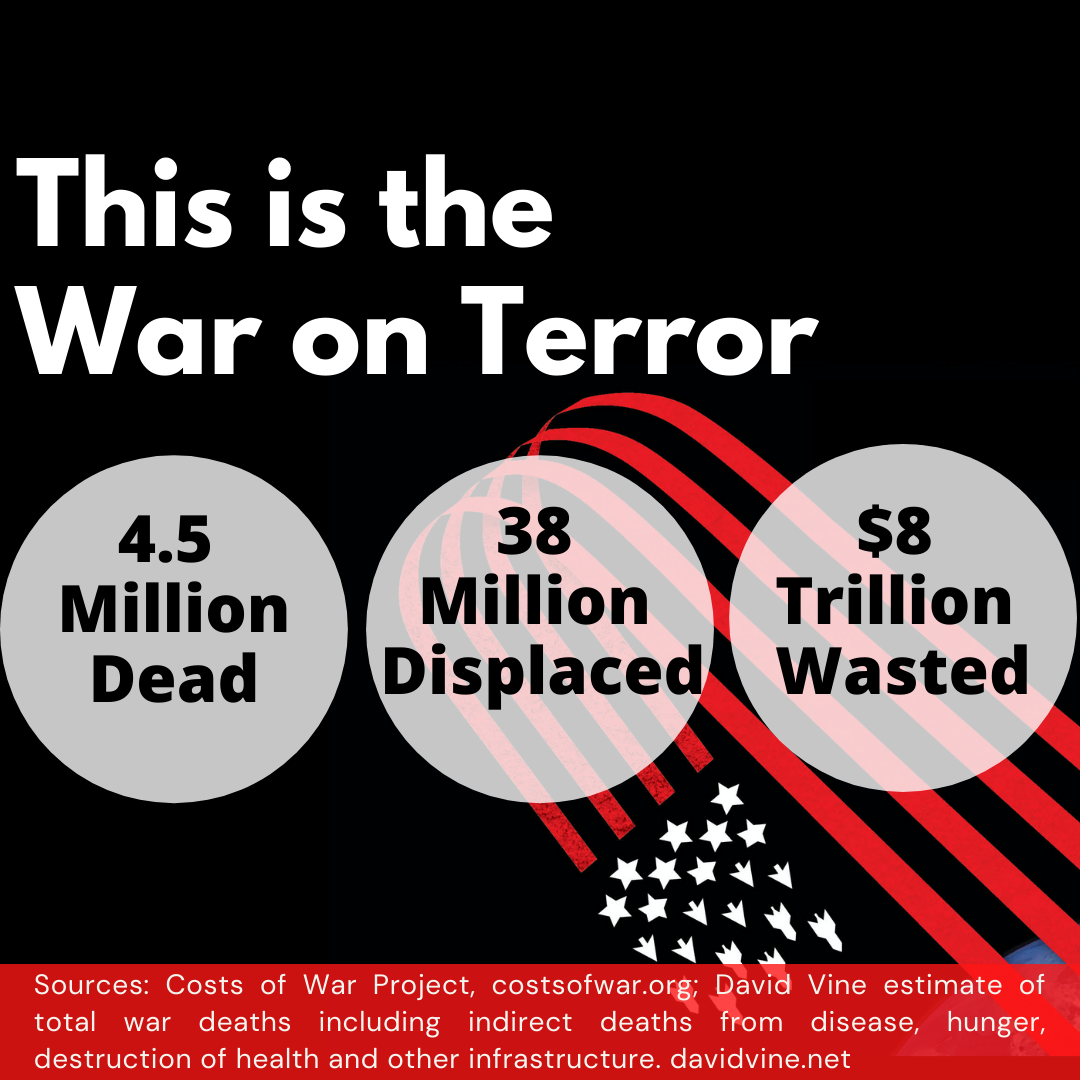
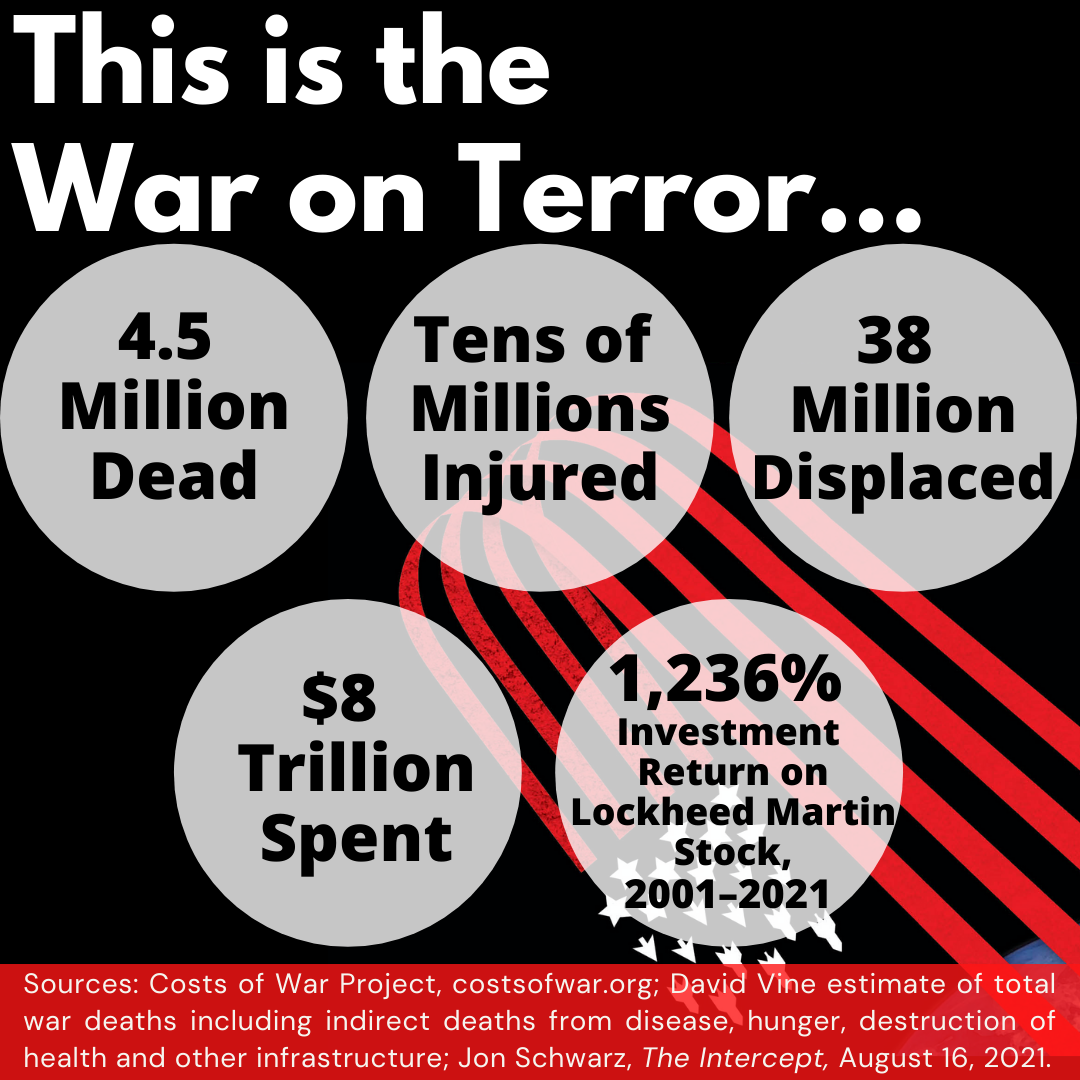
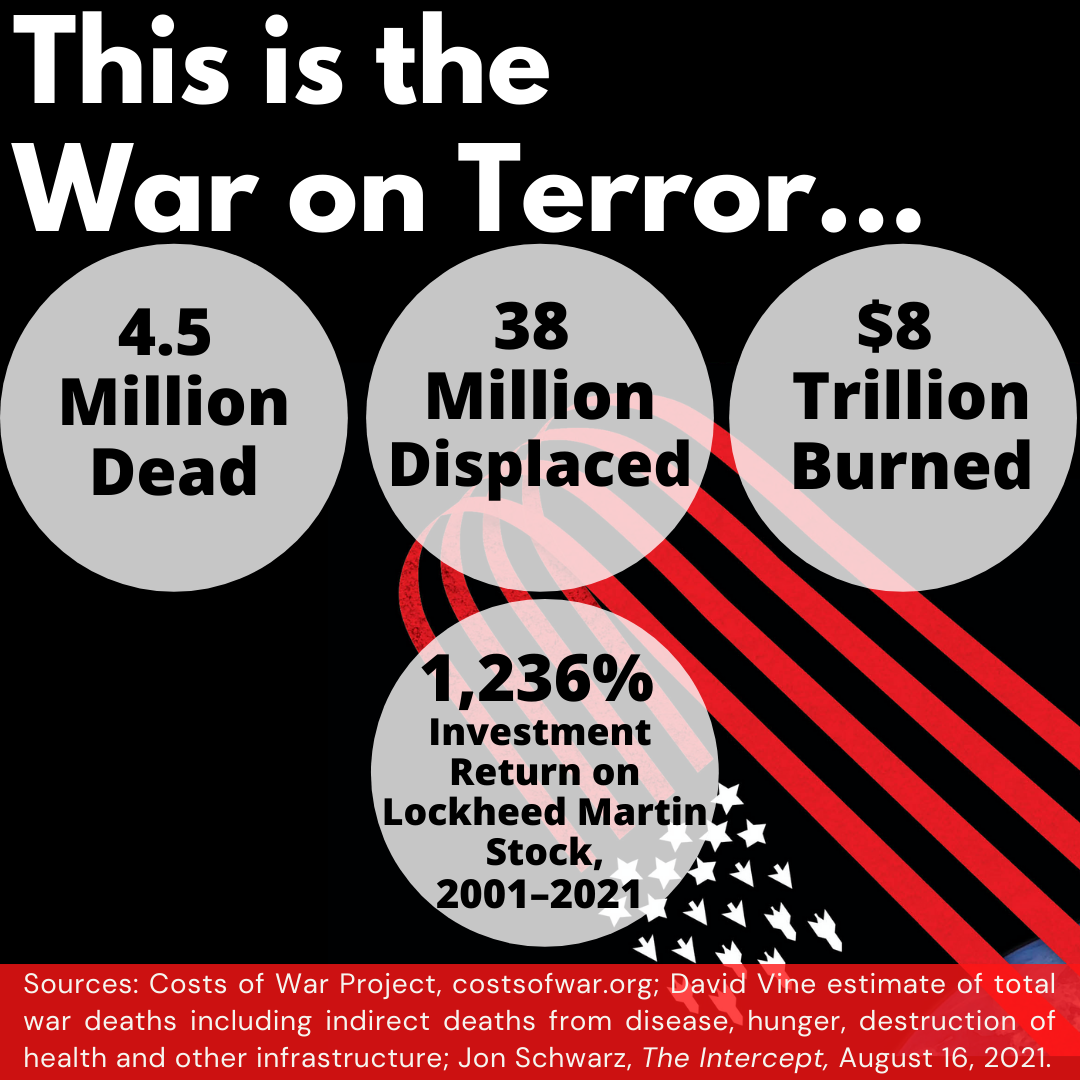
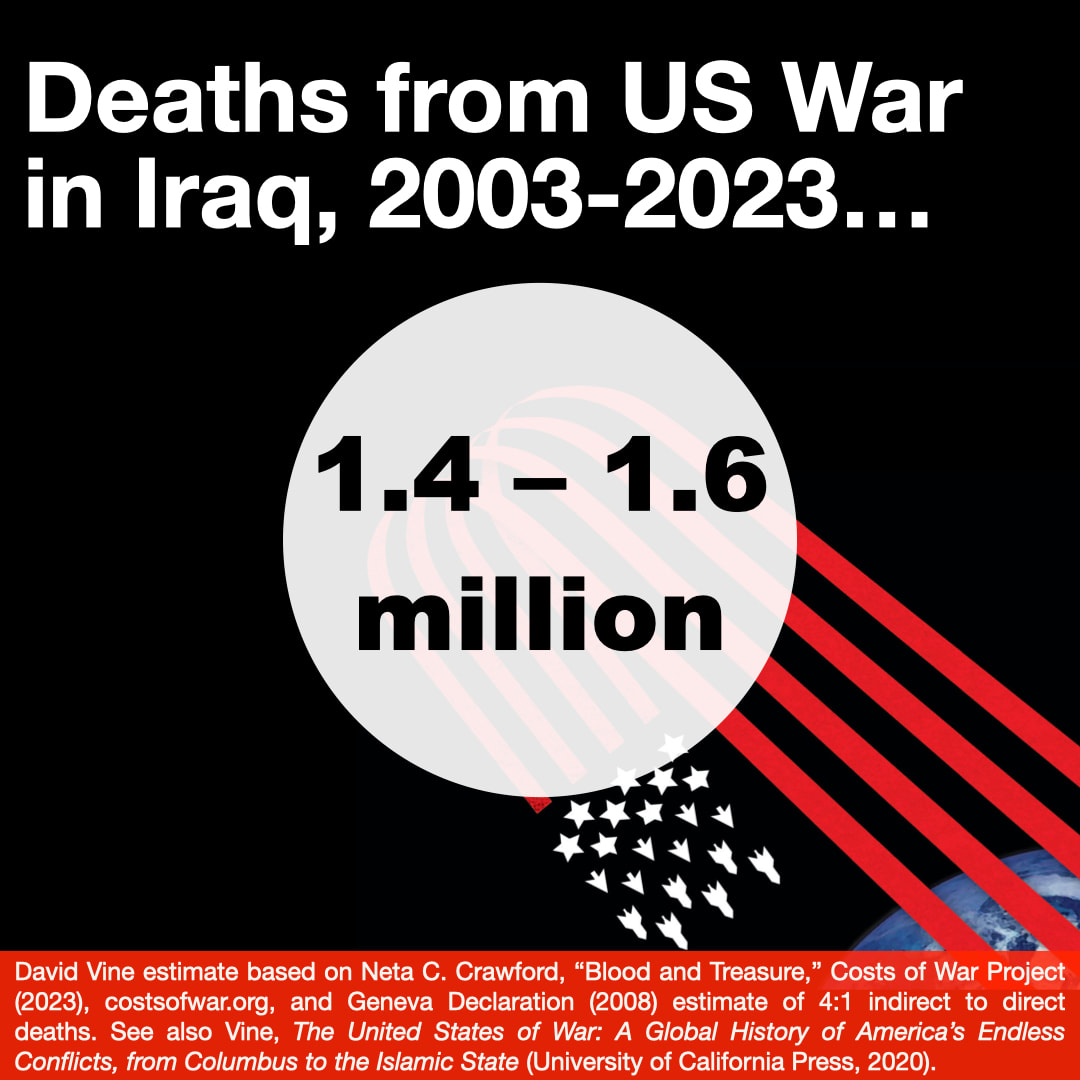
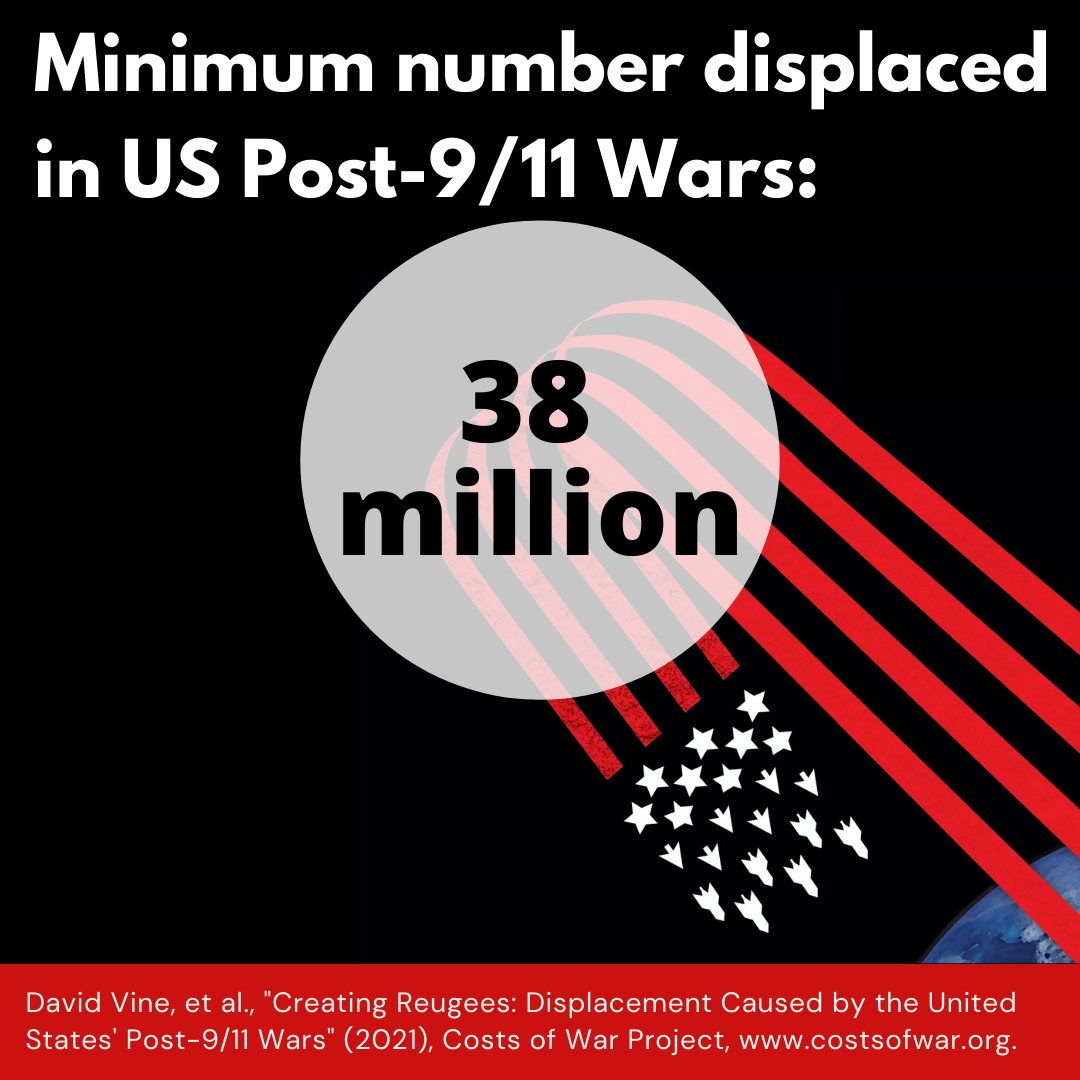
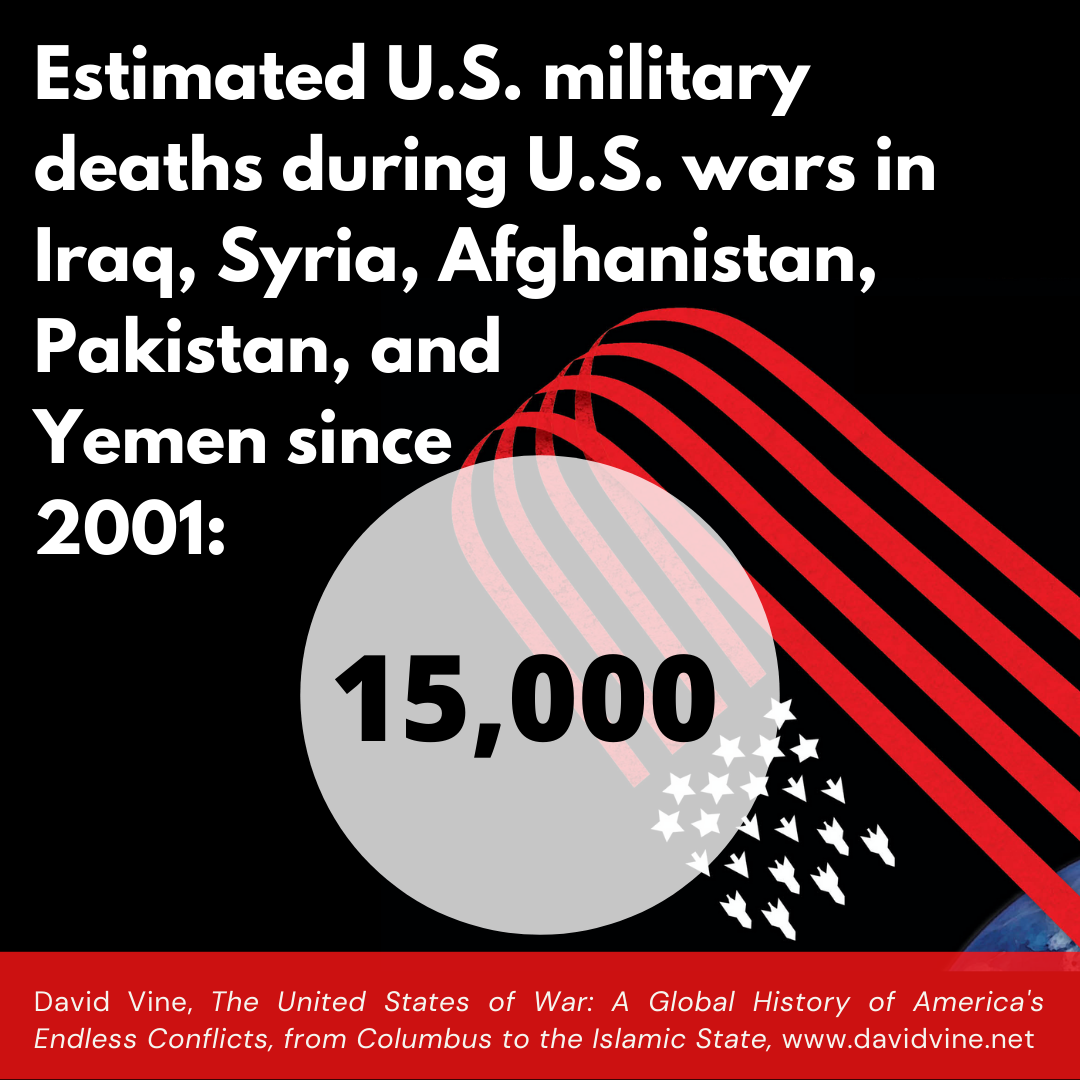
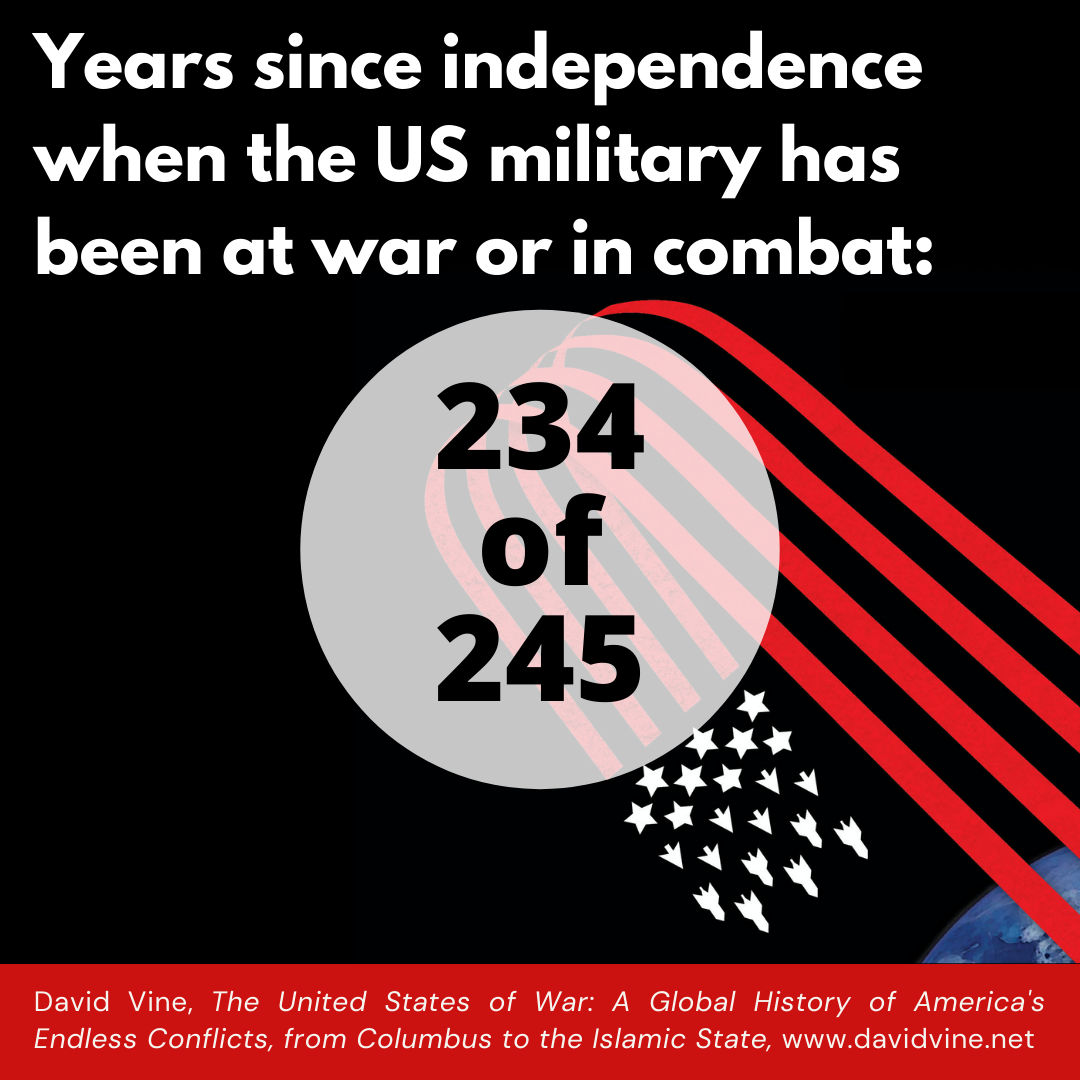
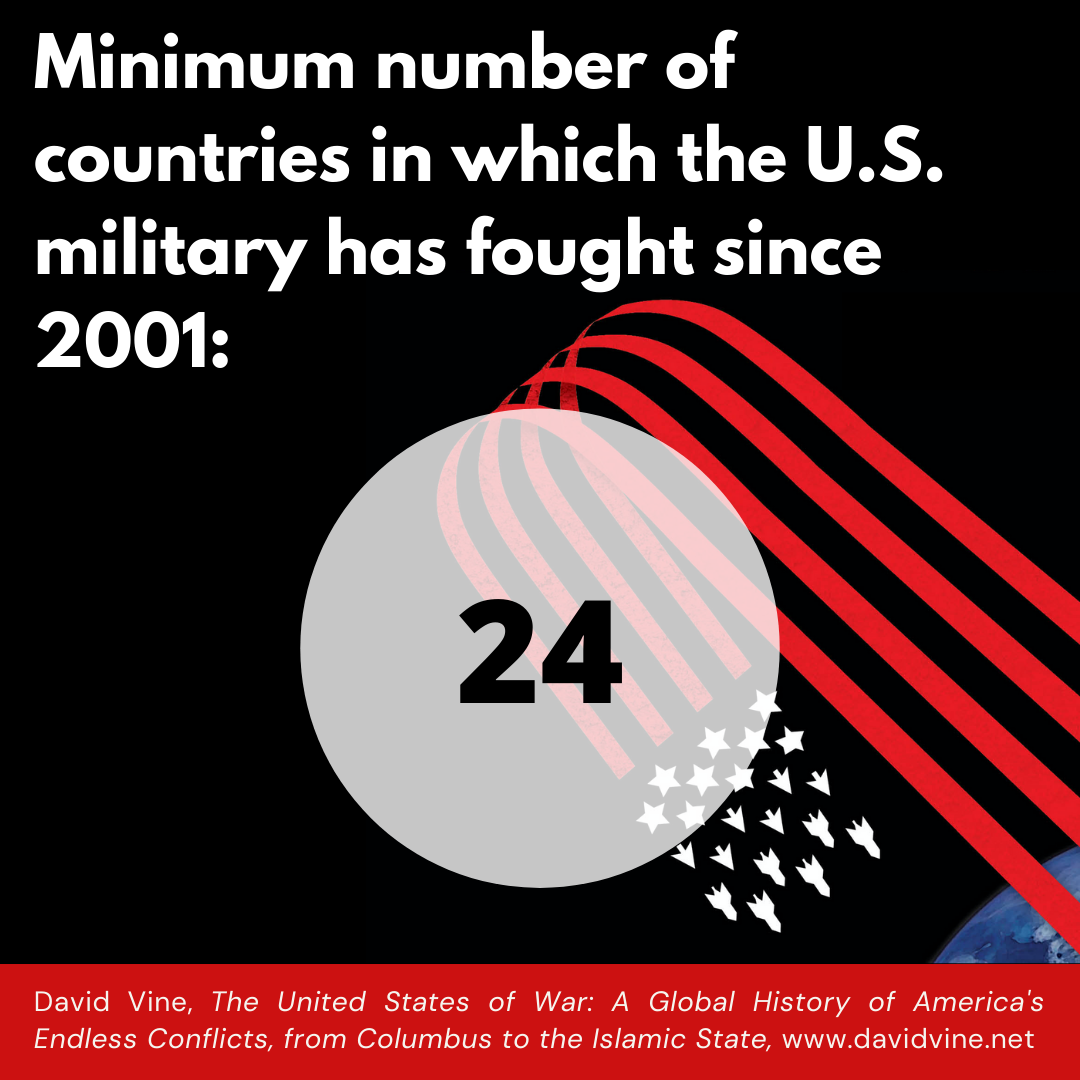
The United States has been fighting wars constantly since invading Afghanistan in 2001. This non-stop warfare is far less exceptional than it might seem: the US has been at war or invaded other countries in almost every year since independence. With The United States of War, David Vine traces this pattern of bloody, near-permanent conflict from Columbus’s 1494 arrival in Guantanamo Bay through the 250-year expansion of a global US empire. Drawing on historical and first-hand ethnographic research in fourteen countries and territories, The United States of War demonstrates how US leaders across generations have locked the United States in a self-perpetuating system of permanent war by constructing the world’s largest ever collection of foreign military bases—a global matrix that has made offensive interventionist wars more likely. Beyond exposing the profit-making desires, political interests, and ideological forces underlying the country’s relationship to war and empire, The United States of War shows how this history of aggressive military expansion shapes our daily lives, from today’s multi-trillion dollar wars to the pervasiveness of violence and militarism in everyday US life. The book concludes by confronting the catastrophic toll of American wars—which have left millions dead, wounded, and displaced—while offering proposals for how we can end the fighting.
"A brisk, sweeping, and utterly persuasive account of the relationship between foreign bases and the U.S. propensity for war. The case that Vine makes is irrefutable: the former spawn the latter."—Andrew Bacevich, author of The Age of Illusions: How America Squandered Its Cold War Victory
"David Vine's book is a brilliant tour de force, a sweeping introspection, dissection, and condemnation of U.S. war-making and the myriad ways that U.S. military bases splayed around the world grease the wheels of the war machine. Exposing the intimate connections between these bases and war, he exhorts us to disentangle the web so that the United States of Peace can emerge. Read it and act."—Medea Benjamin, Codirector, CODEPINK
"Along with this book being a model of excellent scholarship, Vine is a gifted writer. Reading the text is akin to reading the very best of essay writing and will make the text accessible to academic and non-academic readers, as well as to high school, undergraduate, and graduate students."—Roxanne Dunbar-Ortiz, author of An Indigenous Peoples' History of the United States
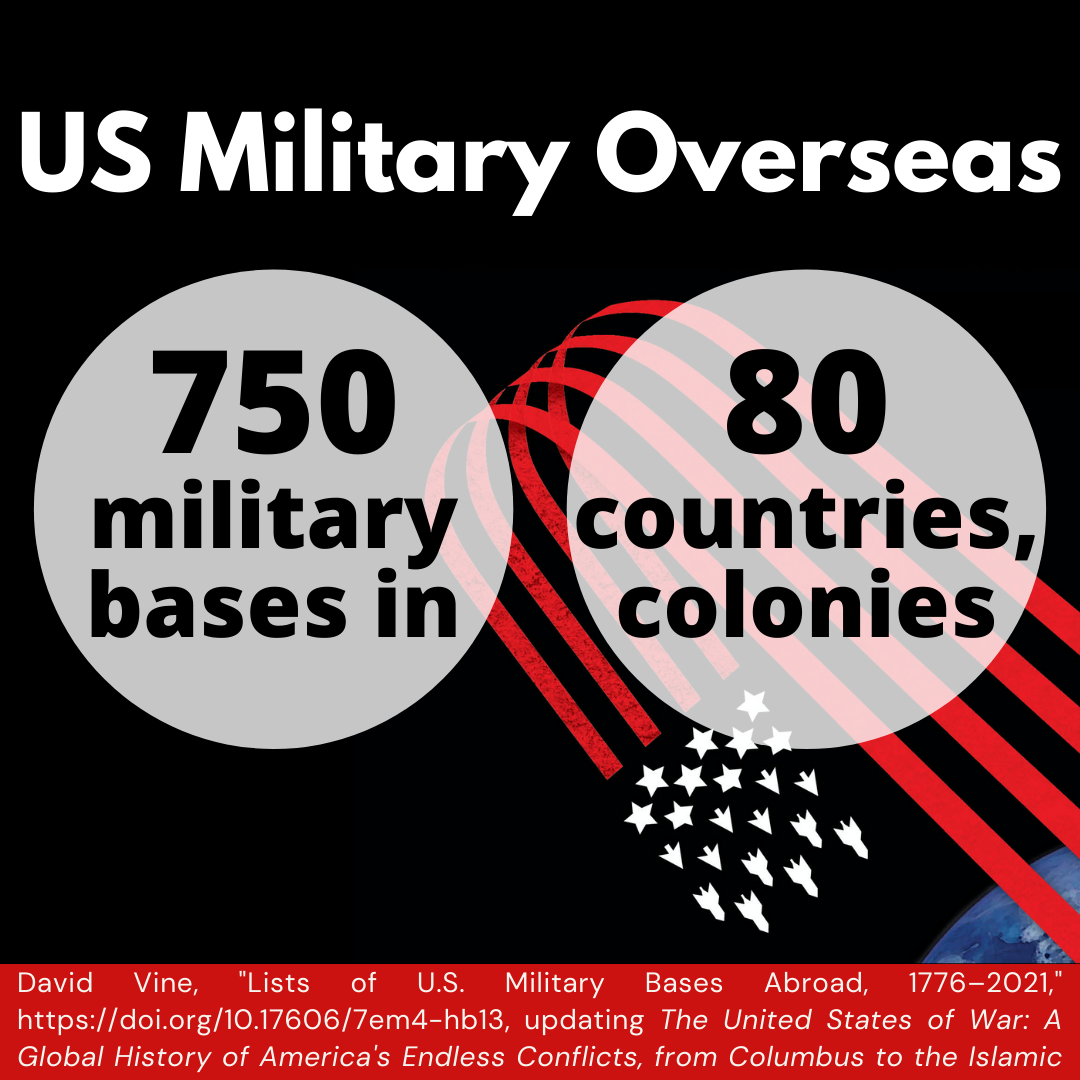
"David Vine's previous book, Base Nation, provided a clear look at rampant U.S. imperialism as exhibited by U.S. overseas basing at some 750 locations across the globe. In a similar vein, The United States of War is an agonizing read even if the myth of U.S. exceptionalism is already badly tattered. In short, 'exceptionalism' only applies if one means unique brutality, violence, ruthlessness, unparalleled pursuit of self-interest, and imperialism of the most blatant and degrading sort—an exceptionalism that has meant the deaths of millions, the maiming of millions more, and the wandering from state to state of even more millions displaced by war. It is not a book to read curled up by a warm winter fire; rather, it's a book to stir your soul—if you have one left—to action."—Colonel Lawrence Wilkerson, US Army (Ret), former chief of staff, U.S. Department of State, and Professor of Government and Public Policy, the College of William and Mary
"David Vine's The United States of War puts a much needed pin to the balloon of American exceptionalism. An invaluable guide to a country that, long before Orwell came along, said war was peace–and interventionism was the highest form of anti-colonialism. The United States of War is especially important now, as we try to make sense of a presidential administration that, in the name of so-called isolationism, has left a trail of global destruction in its wake."—Greg Grandin, Professor of History, Yale University, and author of the Pulitzer Prize–winning The End of the Myth: From the Frontier to the Border Wall in the Mind of America
"Vine's newest book connects Fort Lauderdale to Okinawa. It makes me realize I can't make adequate sense of U.S. militarism today if I don't take seriously Native Americans' history. The book will make us all globally smarter and a lot more curious."—Cynthia Enloe, author of The Big Push: Exposing and Challenging the Persistence of Patriarchy
Read an excerpt from the book published by the Investigative Reporting Workshop.
The United States has been fighting wars constantly since invading Afghanistan in 2001. This non-stop warfare is far less exceptional than it might seem: the US has been at war or invaded other countries in almost every year since independence. With The United States of War, David Vine traces this pattern of bloody, near-permanent conflict from Columbus’s 1494 arrival in Guantanamo Bay through the 250-year expansion of a global US empire. Drawing on historical and first-hand ethnographic research in fourteen countries and territories, The United States of War demonstrates how US leaders across generations have locked the United States in a self-perpetuating system of permanent war by constructing the world’s largest ever collection of foreign military bases—a global matrix that has made offensive interventionist wars more likely. Beyond exposing the profit-making desires, political interests, and ideological forces underlying the country’s relationship to war and empire, The United States of War shows how this history of aggressive military expansion shapes our daily lives, from today’s multi-trillion dollar wars to the pervasiveness of violence and militarism in everyday US life. The book concludes by confronting the catastrophic toll of American wars—which have left millions dead, wounded, and displaced—while offering proposals for how we can end the fighting.
"A brisk, sweeping, and utterly persuasive account of the relationship between foreign bases and the U.S. propensity for war. The case that Vine makes is irrefutable: the former spawn the latter."—Andrew Bacevich, author of The Age of Illusions: How America Squandered Its Cold War Victory
"David Vine's book is a brilliant tour de force, a sweeping introspection, dissection, and condemnation of U.S. war-making and the myriad ways that U.S. military bases splayed around the world grease the wheels of the war machine. Exposing the intimate connections between these bases and war, he exhorts us to disentangle the web so that the United States of Peace can emerge. Read it and act."—Medea Benjamin, Codirector, CODEPINK
"Along with this book being a model of excellent scholarship, Vine is a gifted writer. Reading the text is akin to reading the very best of essay writing and will make the text accessible to academic and non-academic readers, as well as to high school, undergraduate, and graduate students."—Roxanne Dunbar-Ortiz, author of An Indigenous Peoples' History of the United States
"David Vine's previous book, Base Nation, provided a clear look at rampant U.S. imperialism as exhibited by U.S. overseas basing at some 750 locations across the globe. In a similar vein, The United States of War is an agonizing read even if the myth of U.S. exceptionalism is already badly tattered. In short, 'exceptionalism' only applies if one means unique brutality, violence, ruthlessness, unparalleled pursuit of self-interest, and imperialism of the most blatant and degrading sort—an exceptionalism that has meant the deaths of millions, the maiming of millions more, and the wandering from state to state of even more millions displaced by war. It is not a book to read curled up by a warm winter fire; rather, it's a book to stir your soul—if you have one left—to action."—Colonel Lawrence Wilkerson, US Army (Ret), former chief of staff, U.S. Department of State, and Professor of Government and Public Policy, the College of William and Mary
"David Vine's The United States of War puts a much needed pin to the balloon of American exceptionalism. An invaluable guide to a country that, long before Orwell came along, said war was peace–and interventionism was the highest form of anti-colonialism. The United States of War is especially important now, as we try to make sense of a presidential administration that, in the name of so-called isolationism, has left a trail of global destruction in its wake."—Greg Grandin, Professor of History, Yale University, and author of the Pulitzer Prize–winning The End of the Myth: From the Frontier to the Border Wall in the Mind of America
"Vine's newest book connects Fort Lauderdale to Okinawa. It makes me realize I can't make adequate sense of U.S. militarism today if I don't take seriously Native Americans' history. The book will make us all globally smarter and a lot more curious."—Cynthia Enloe, author of The Big Push: Exposing and Challenging the Persistence of Patriarchy
Read an excerpt from the book published by the Investigative Reporting Workshop.
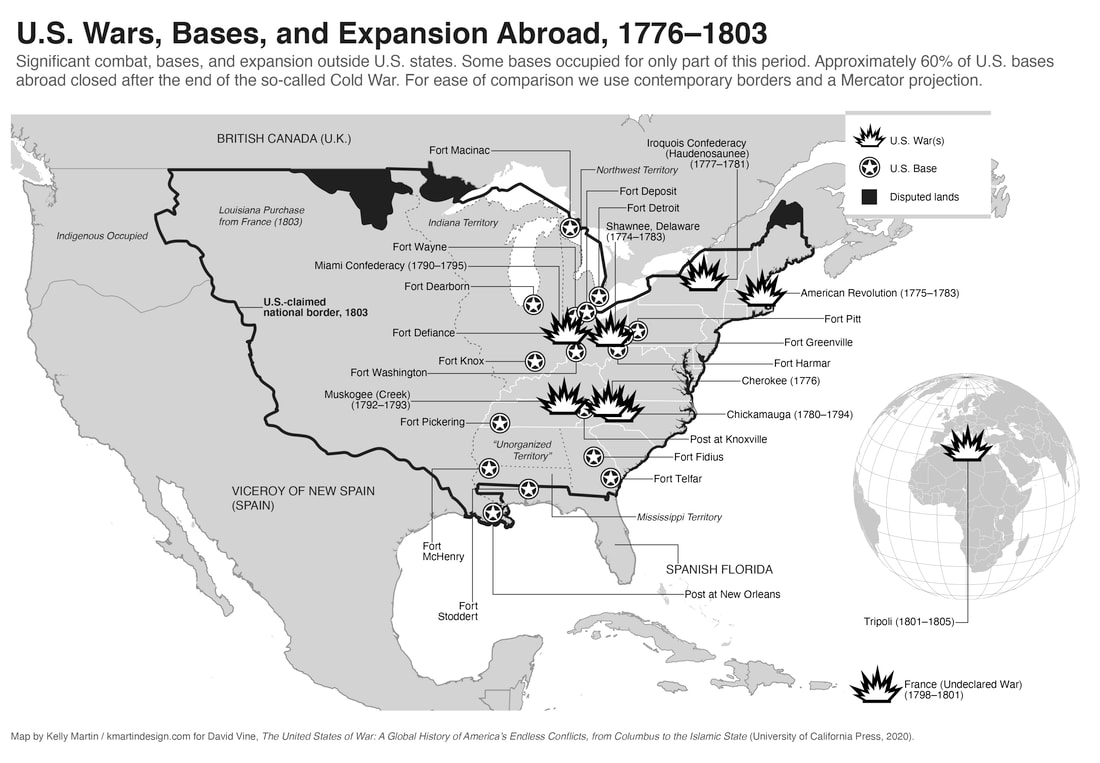
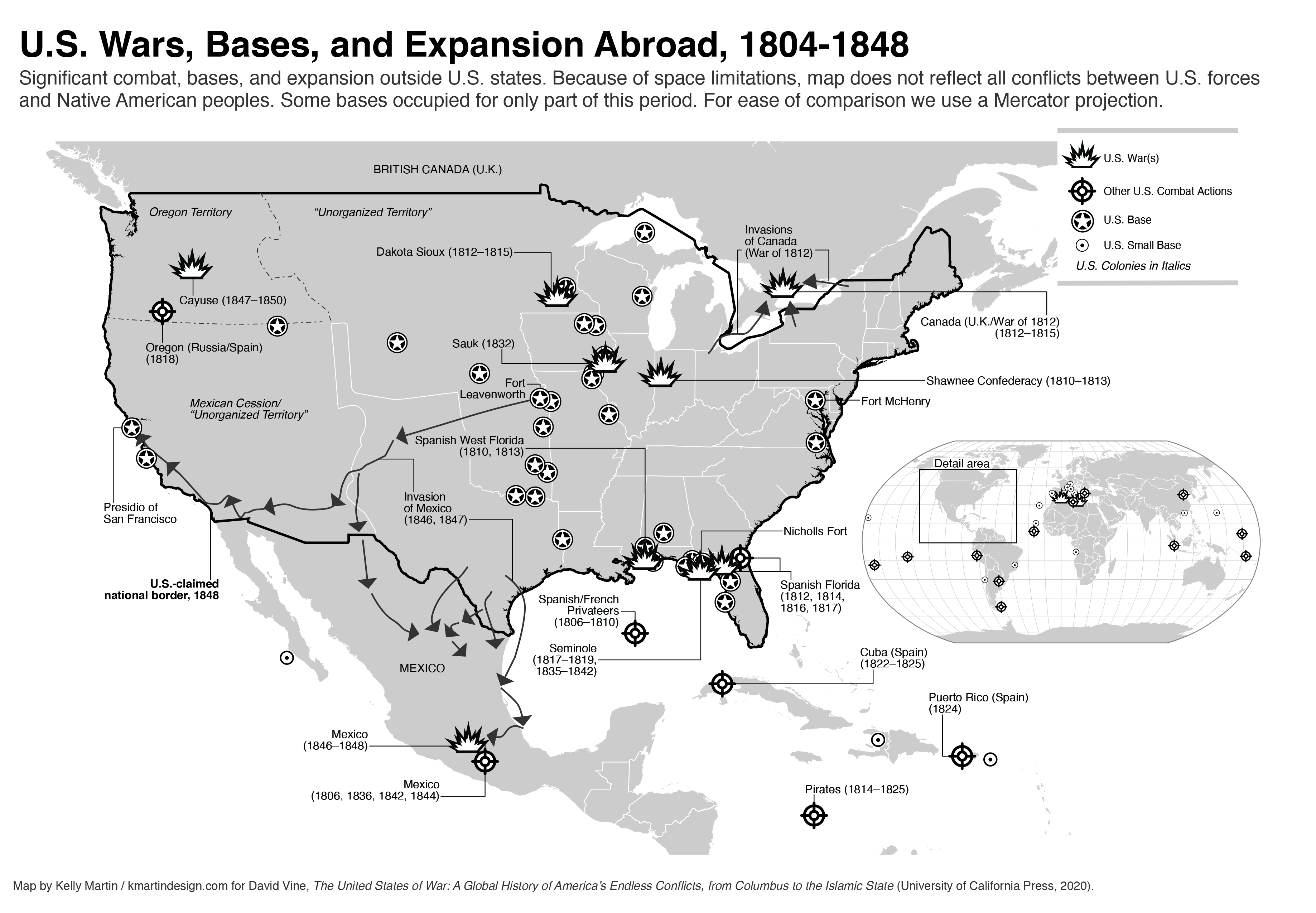
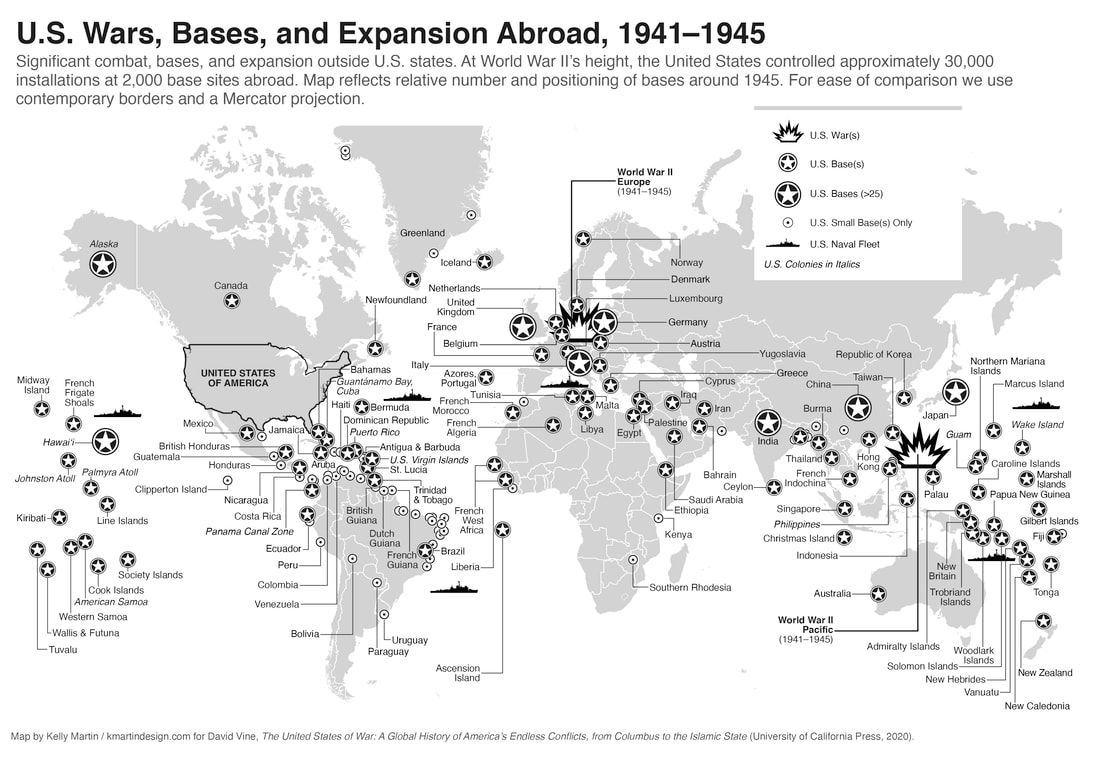
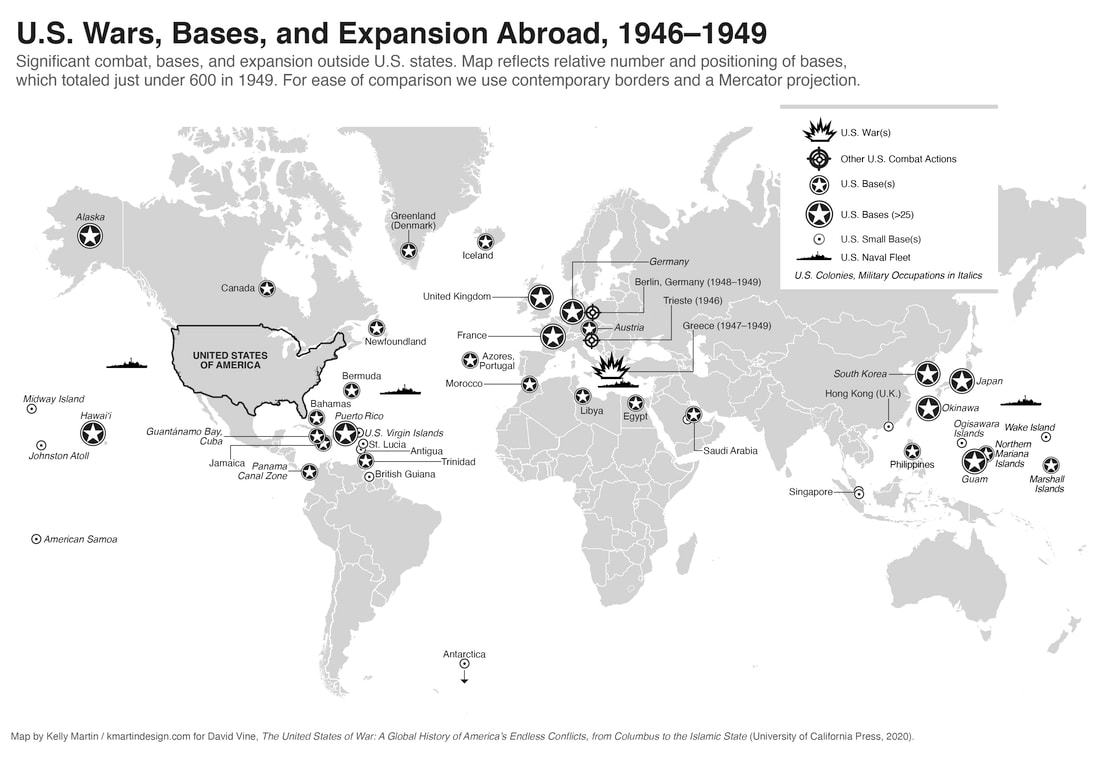
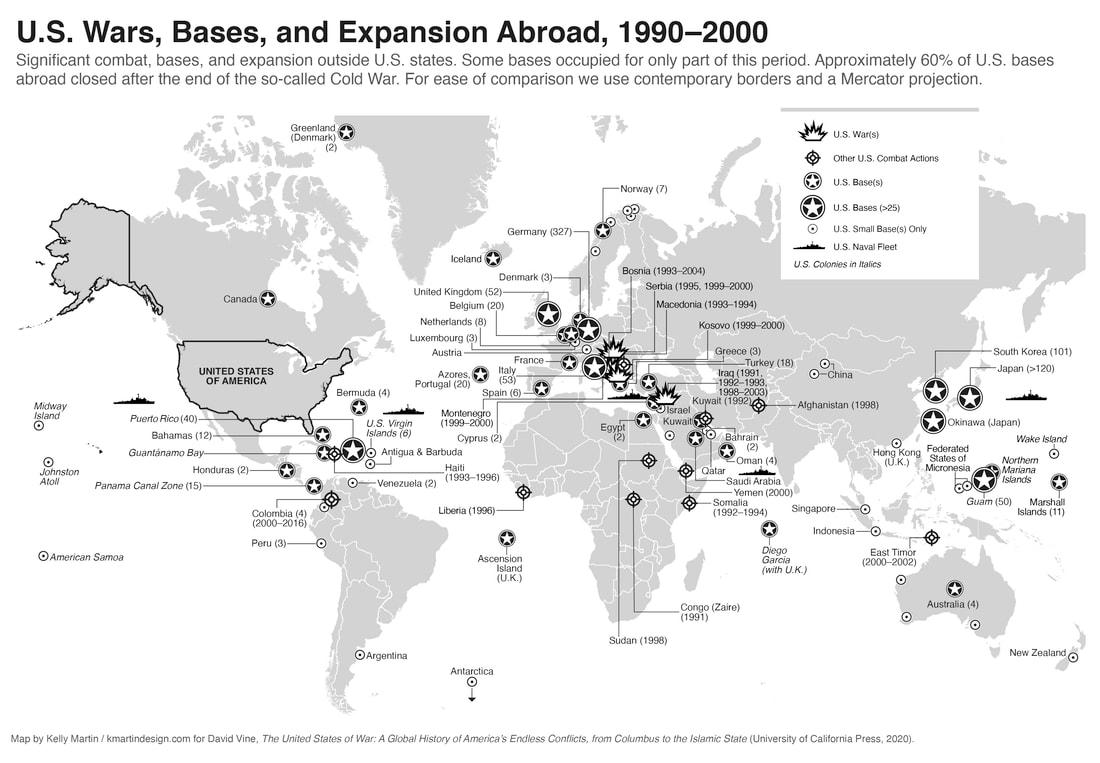
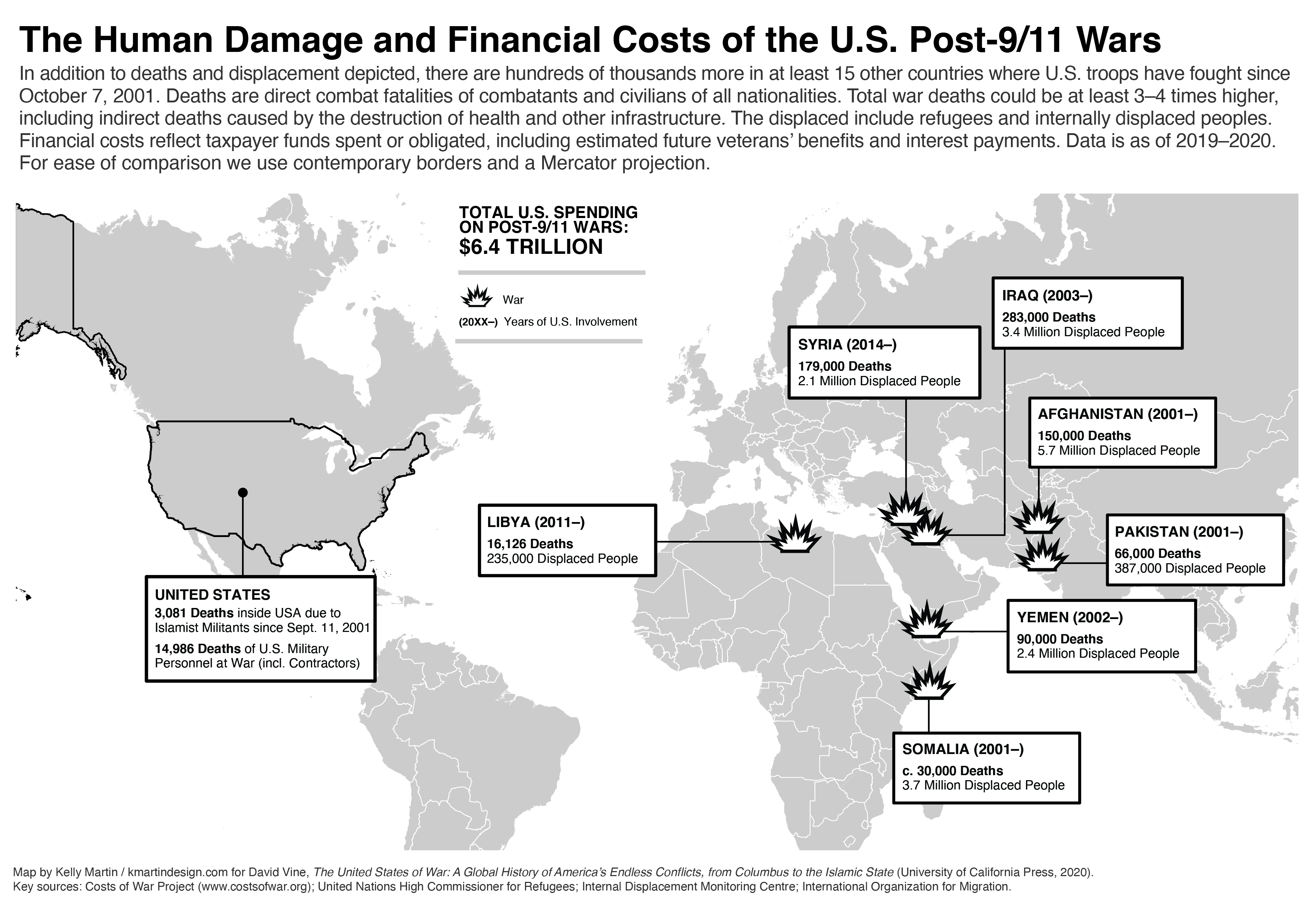
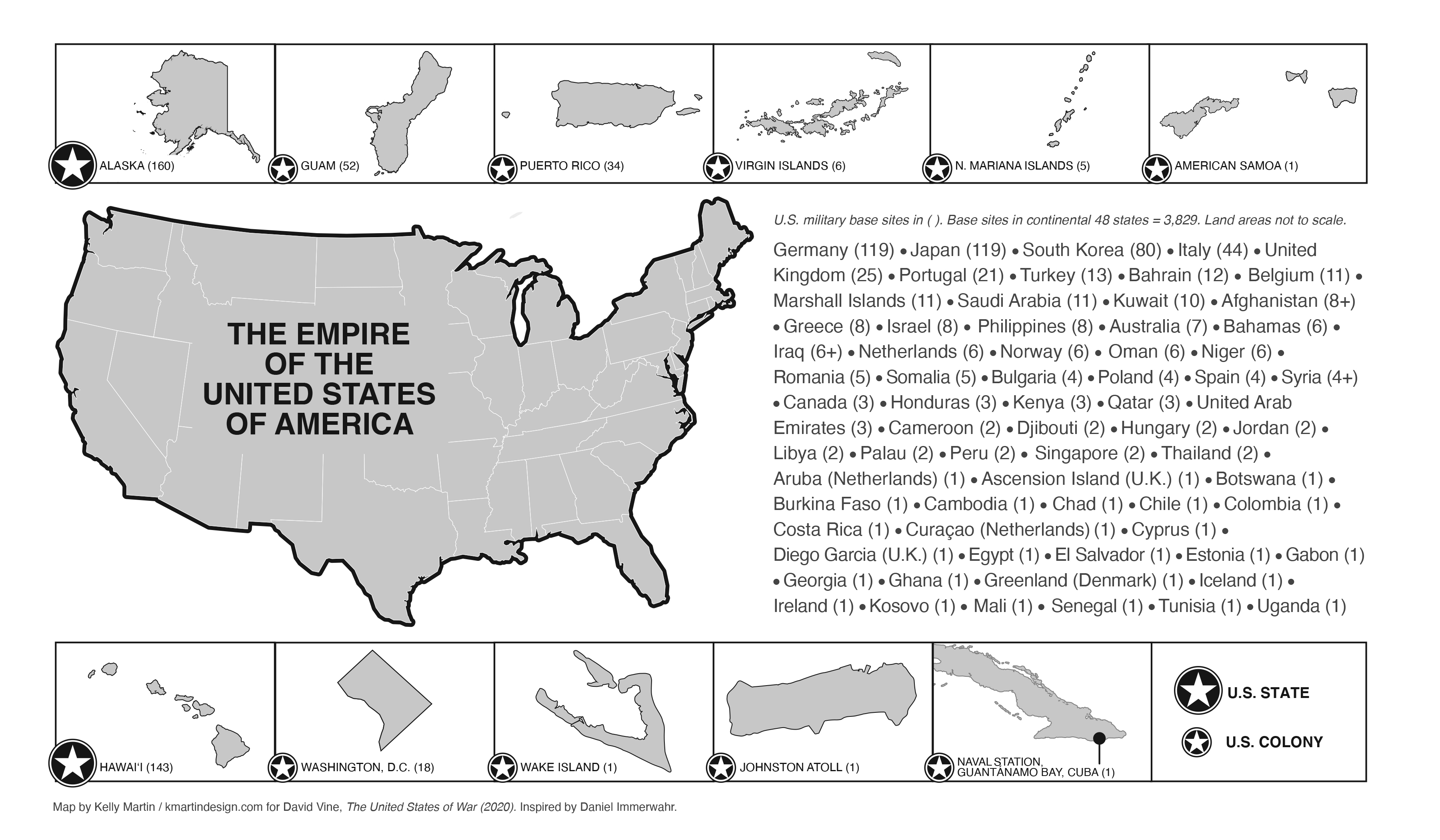
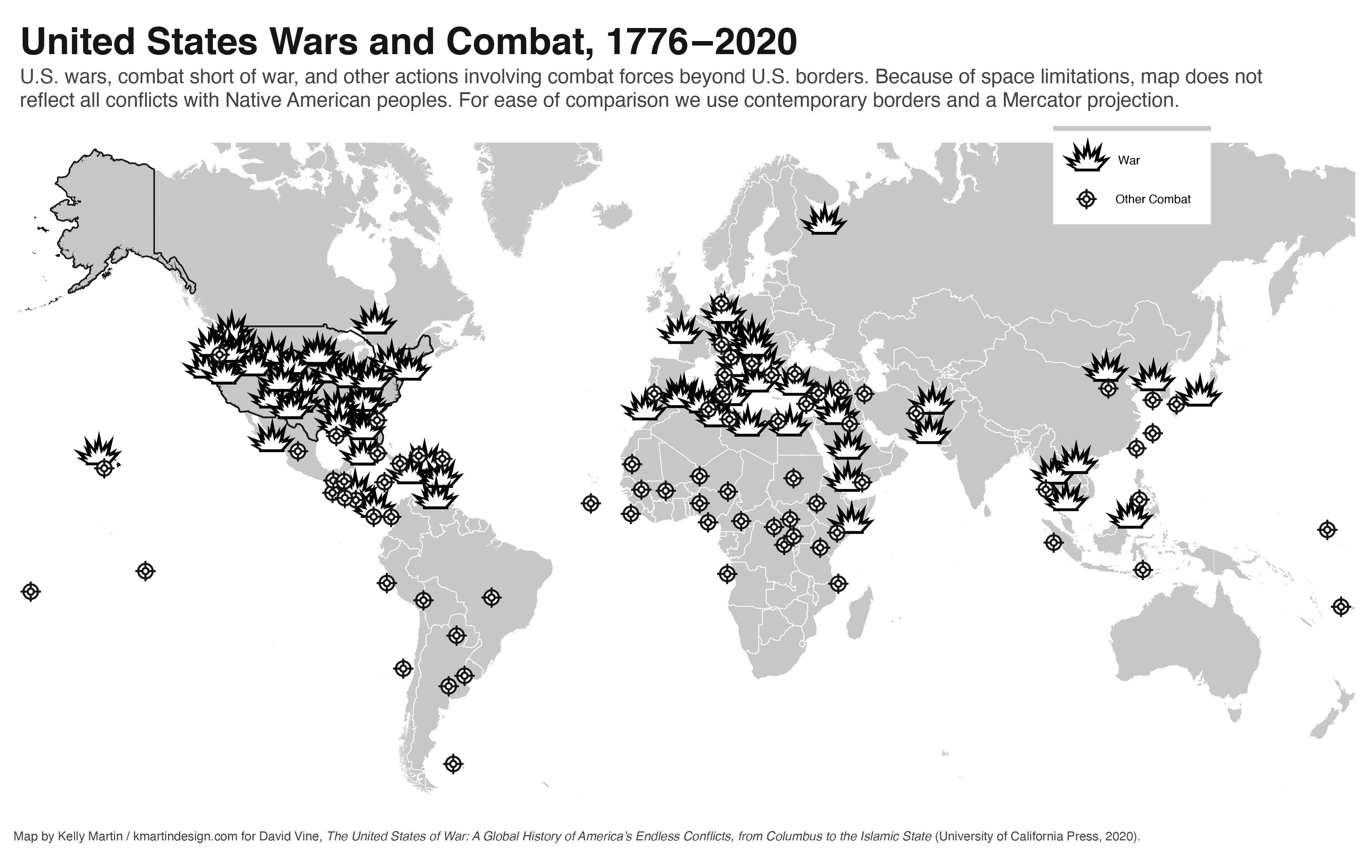
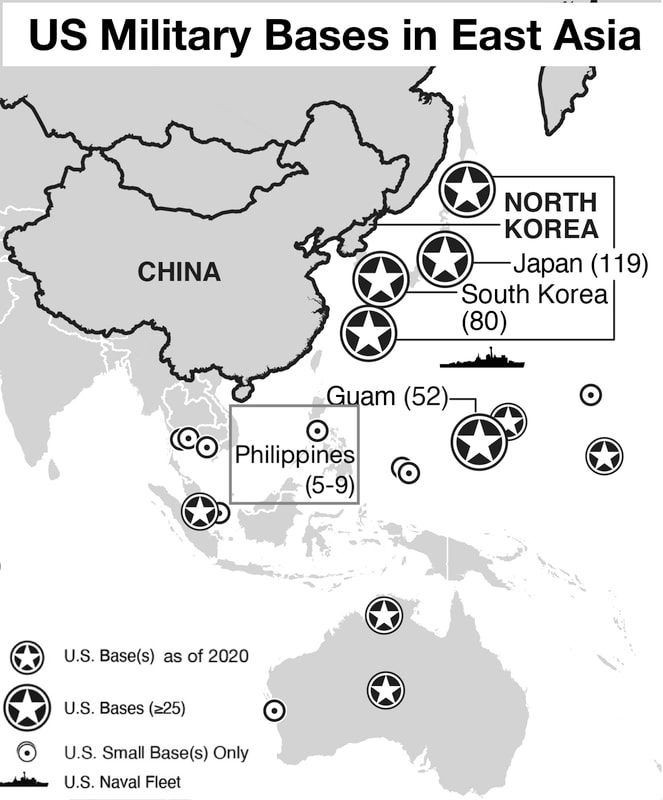
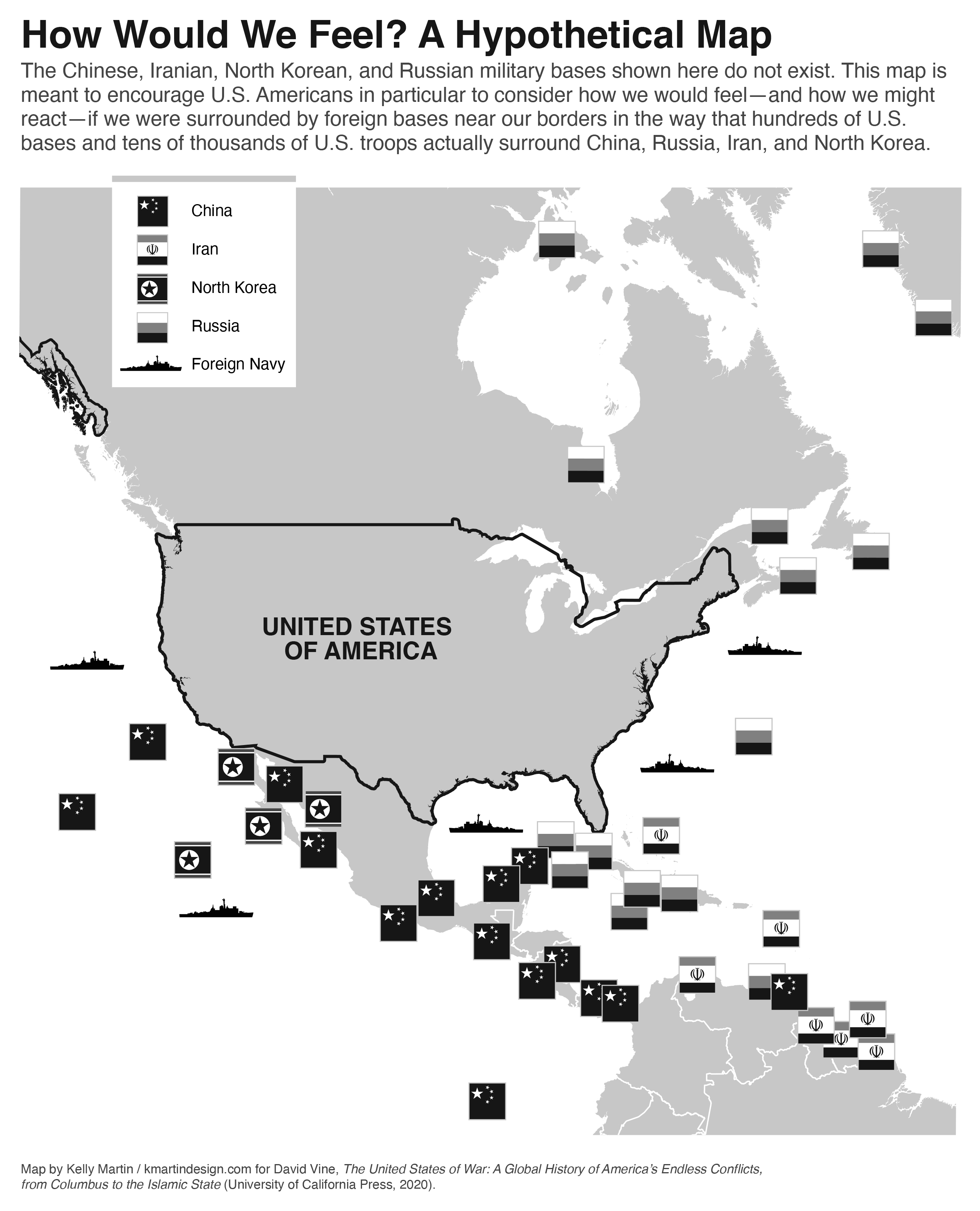
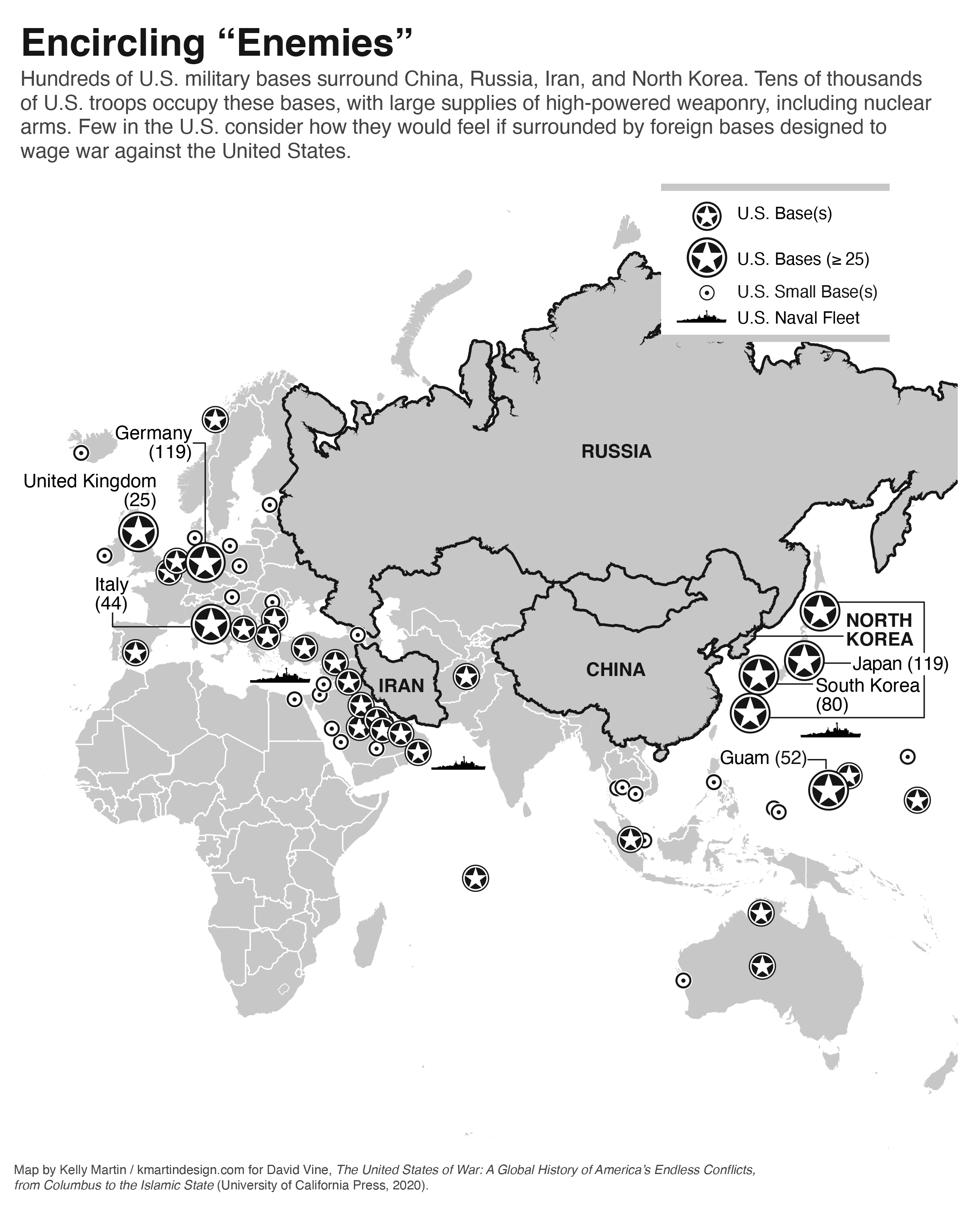
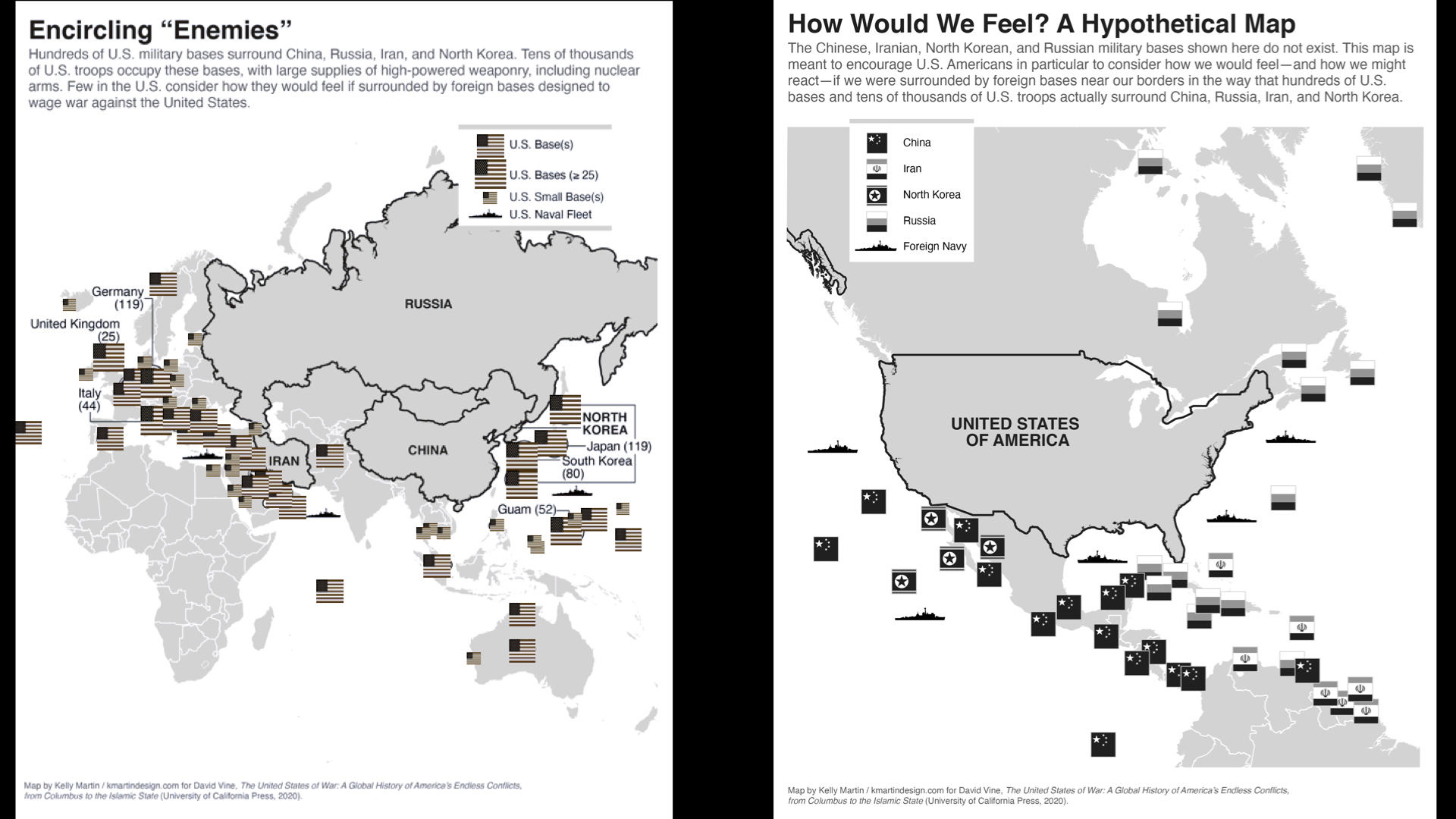
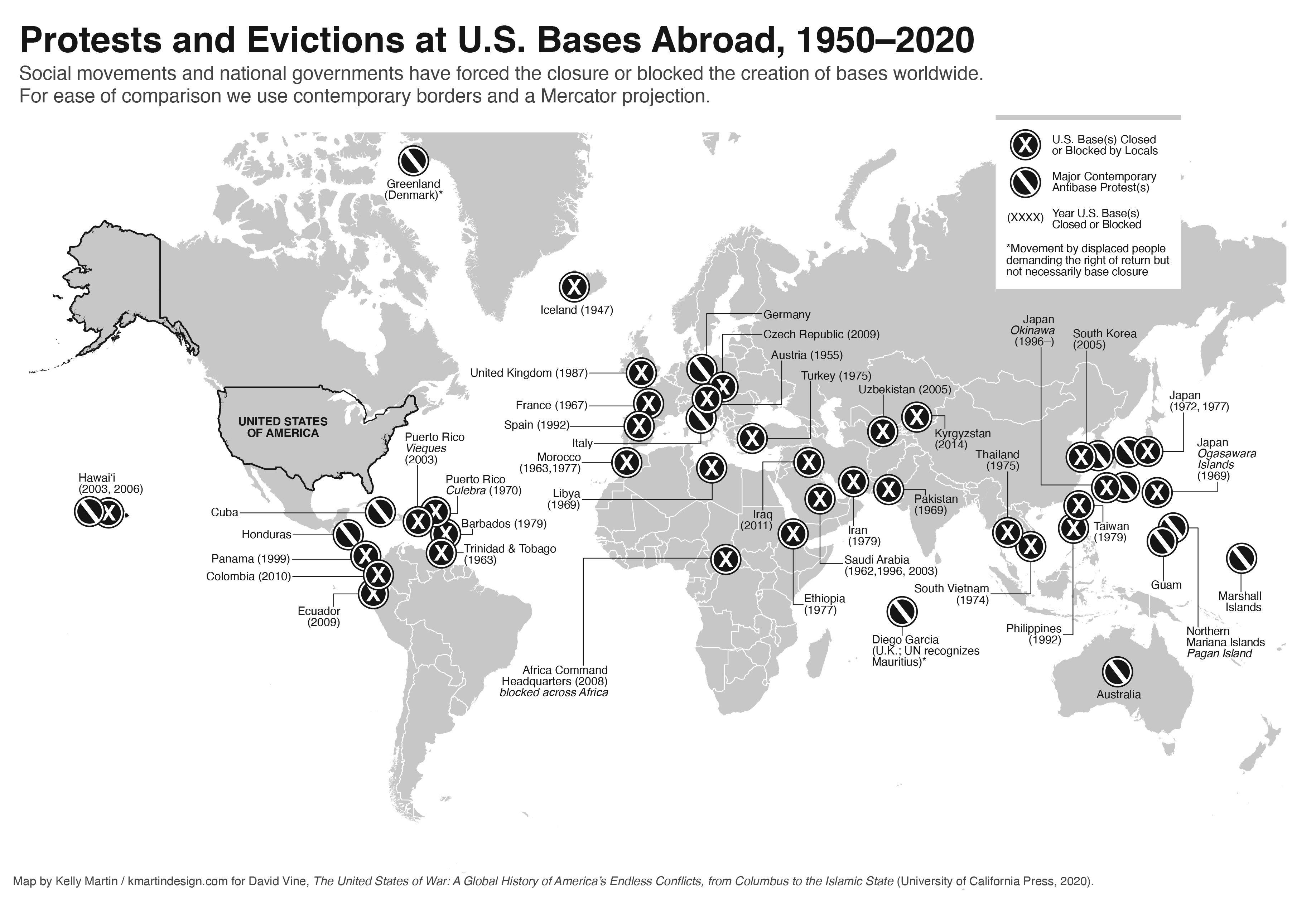
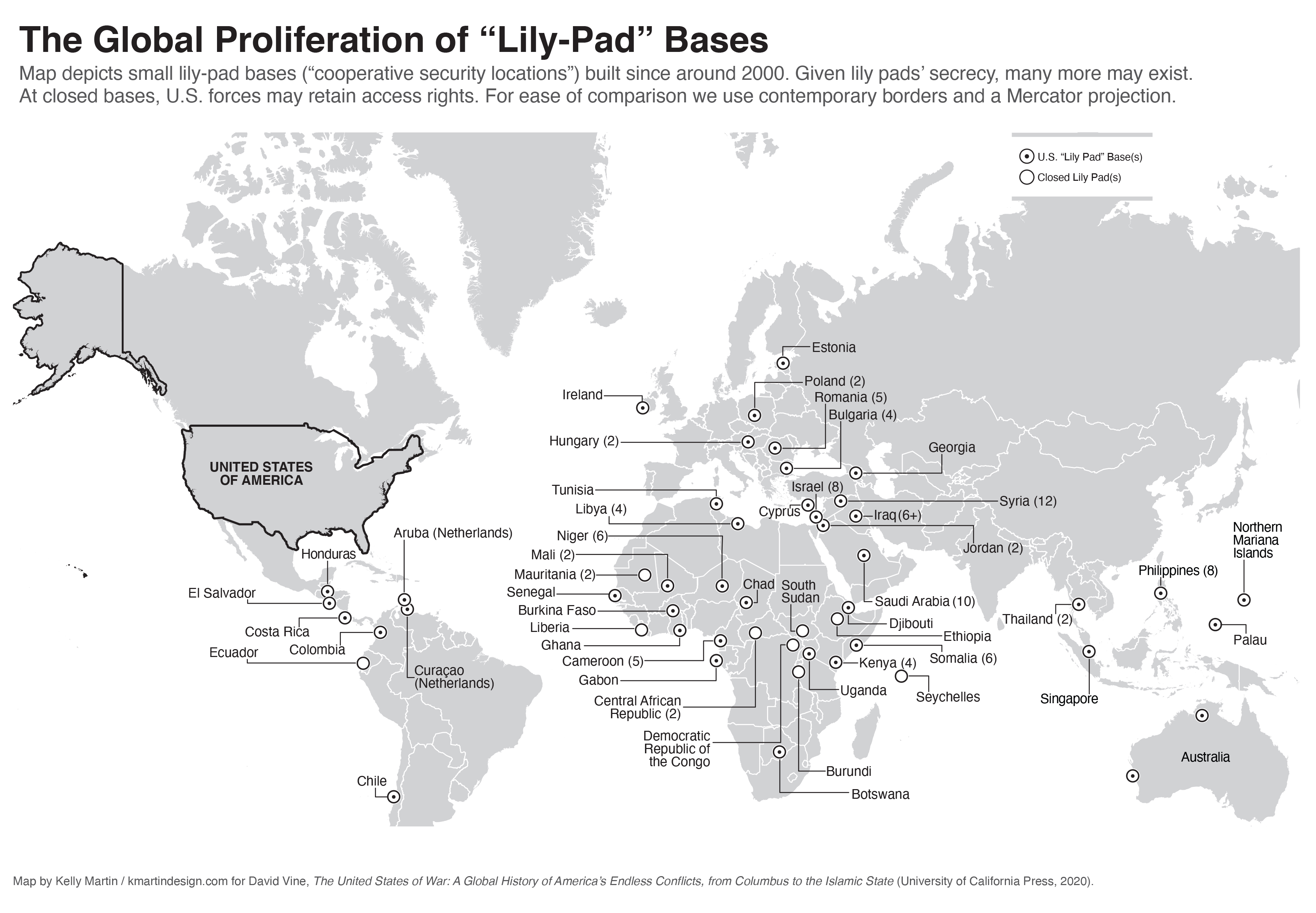
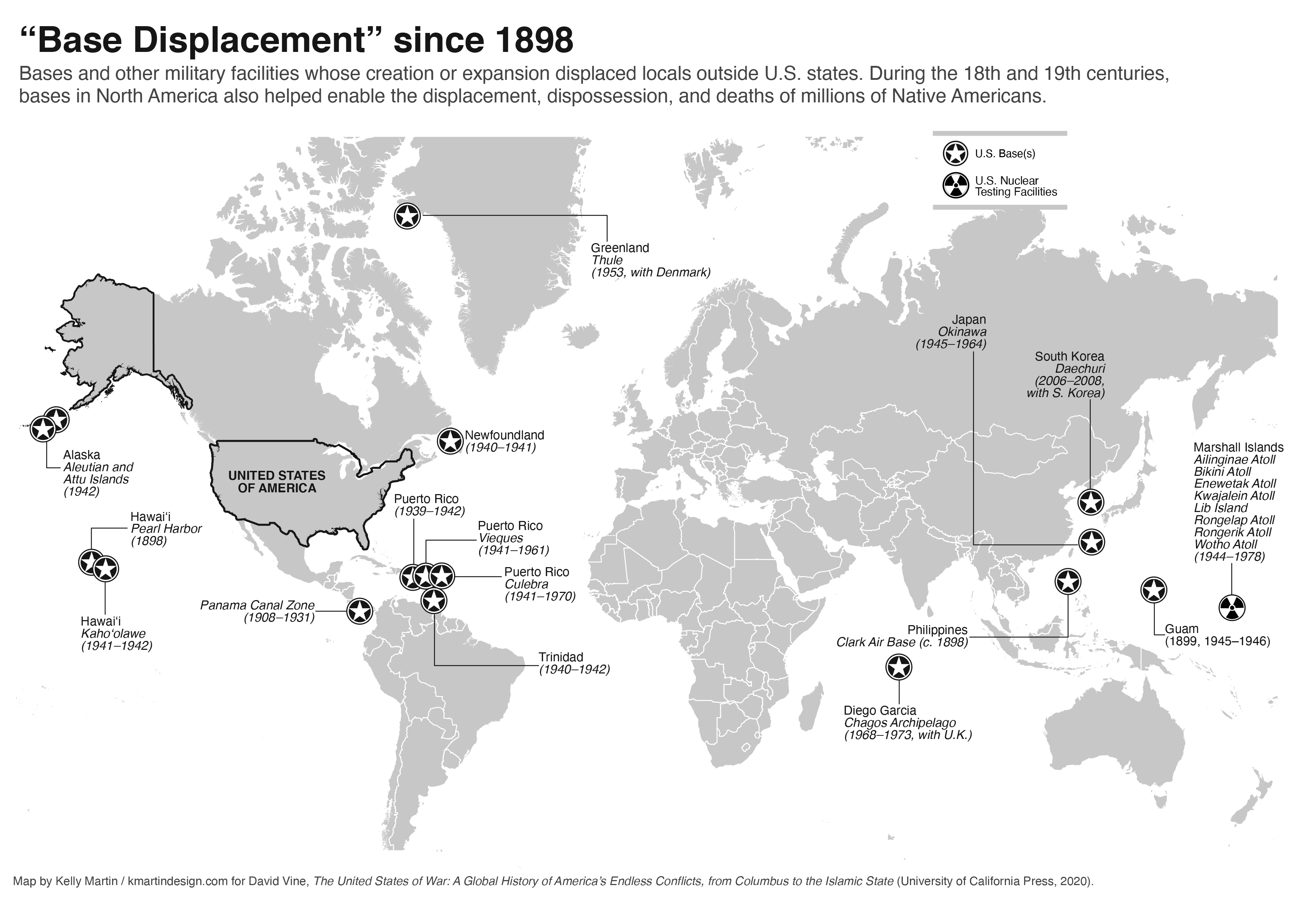
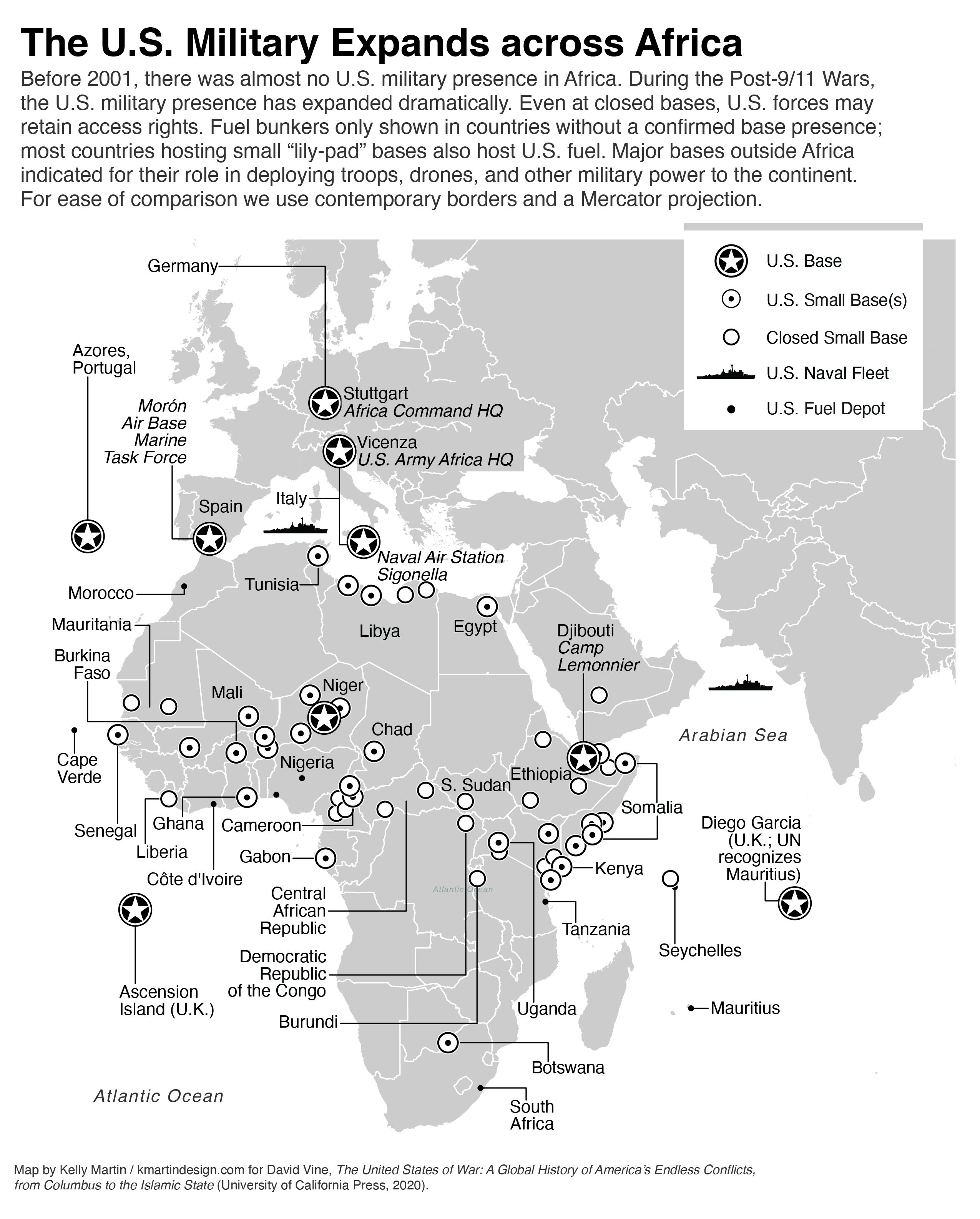
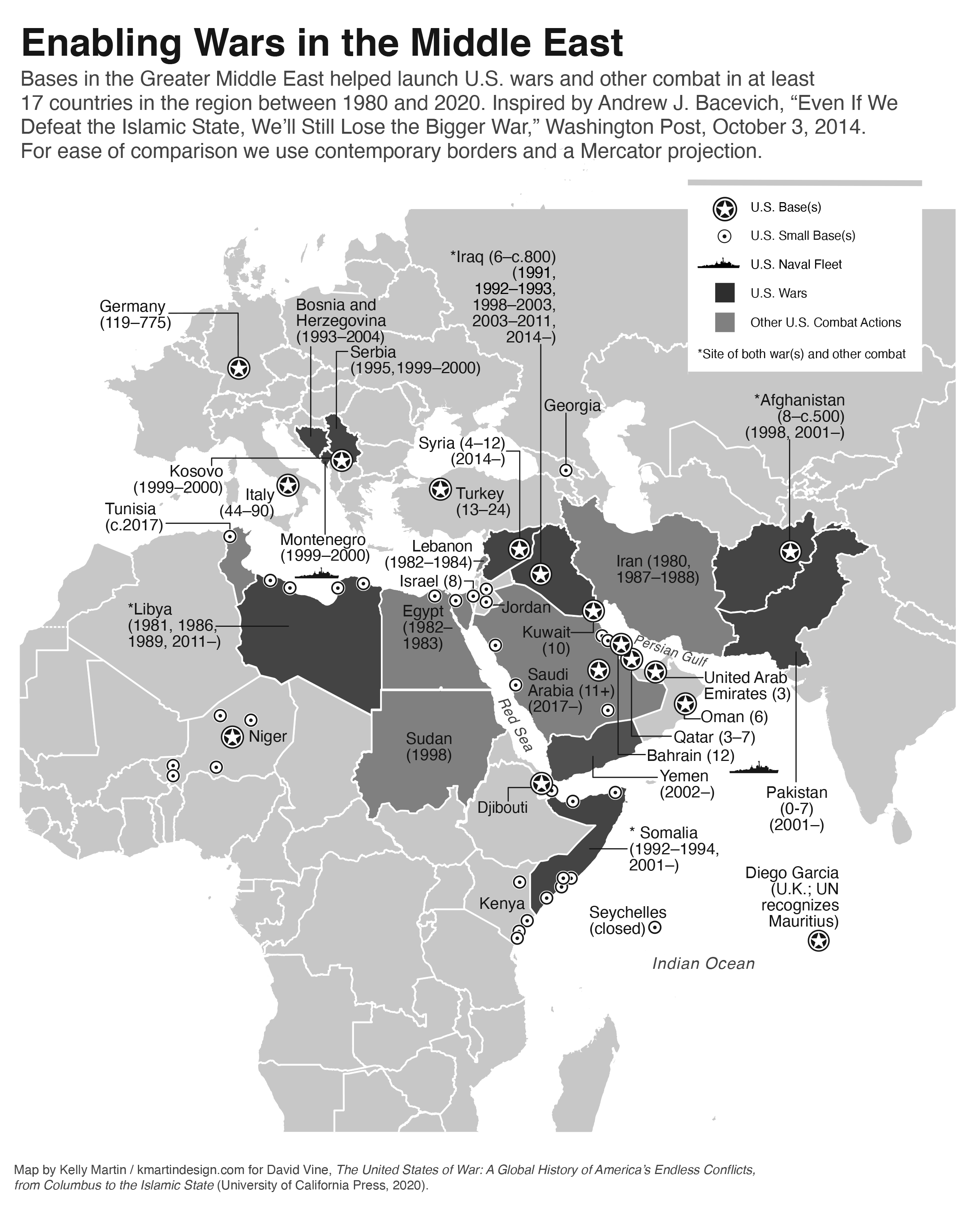
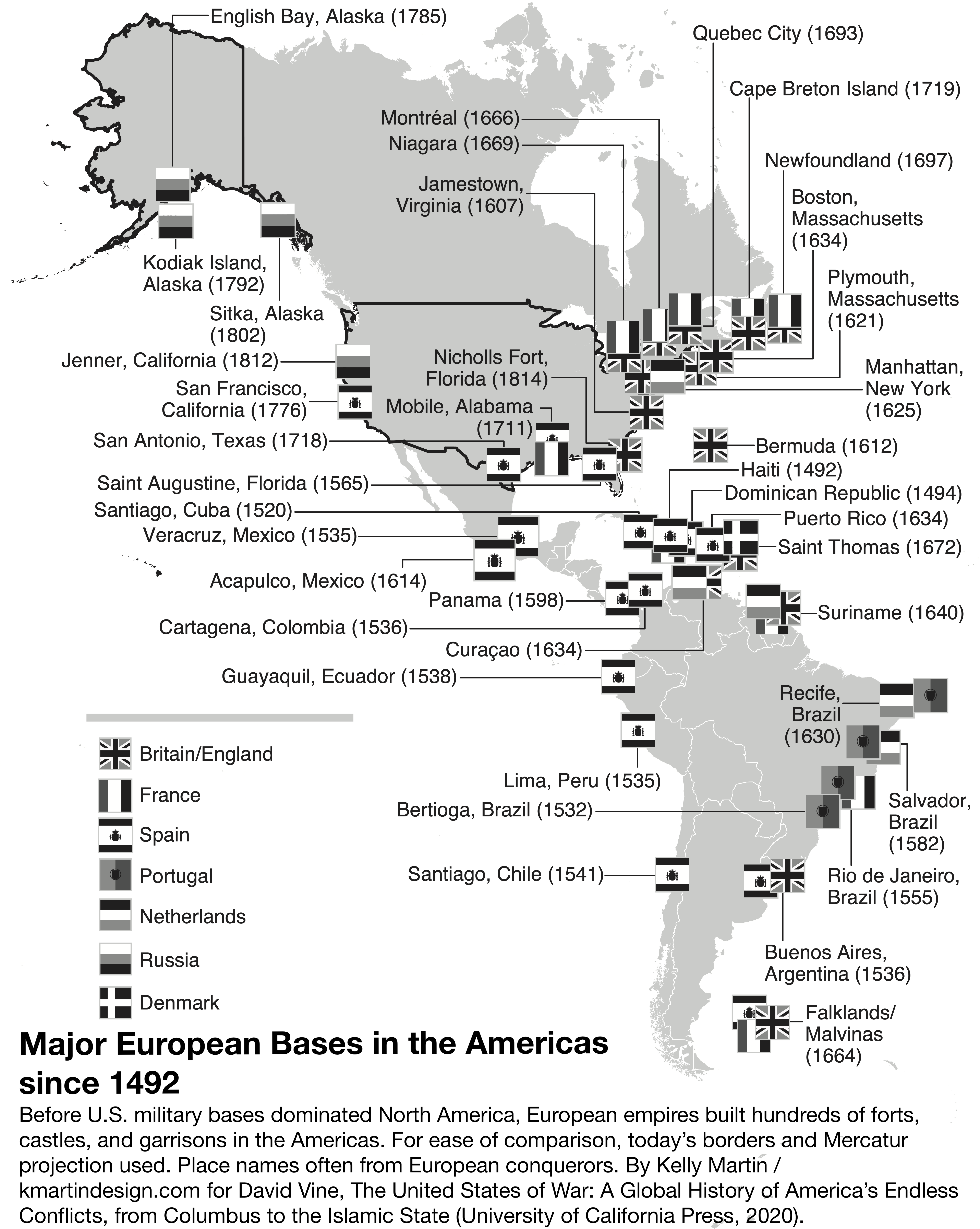
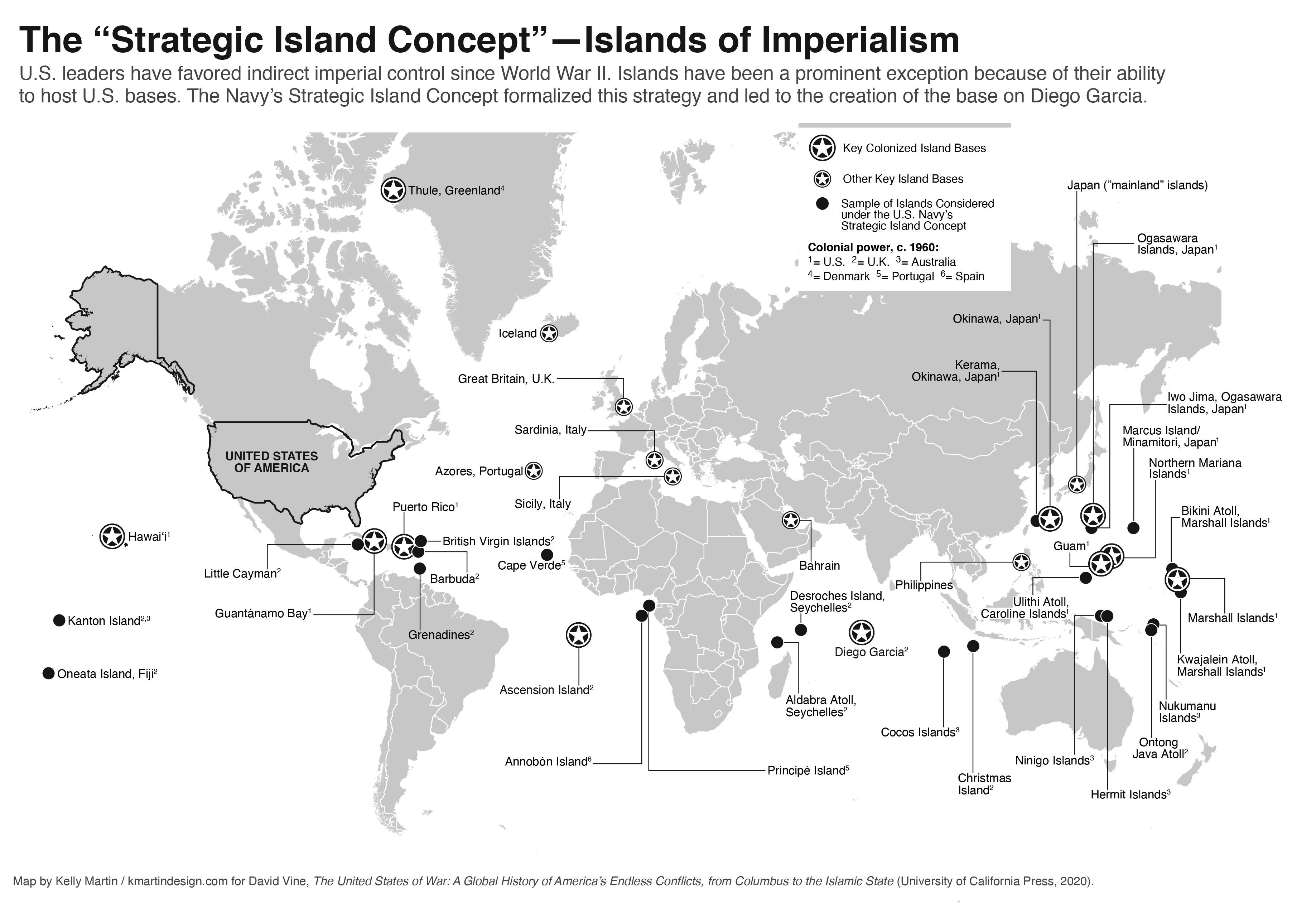
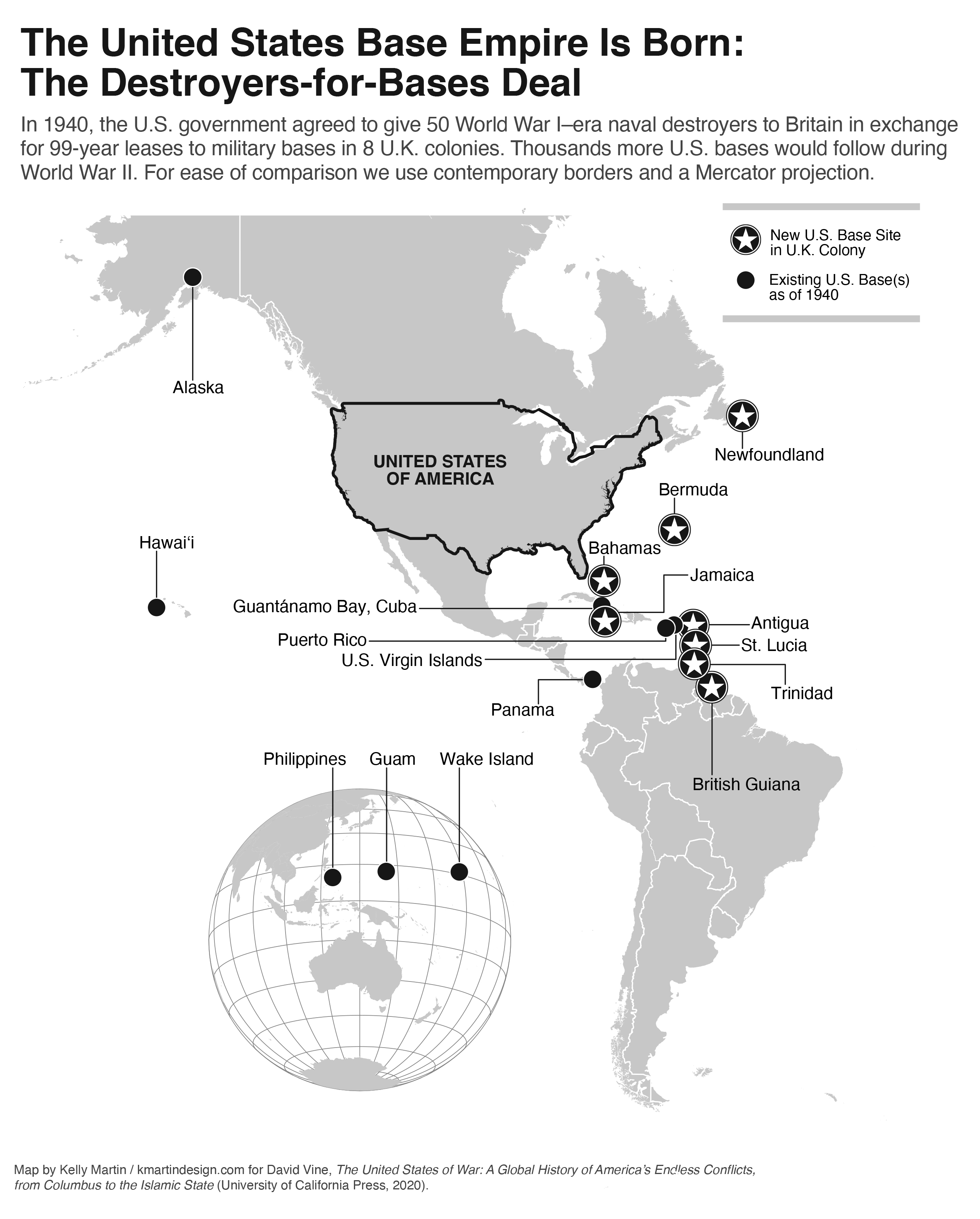
Some of the 28 Maps in The United States of War.
Download for free. Please credit as indicated on each map.
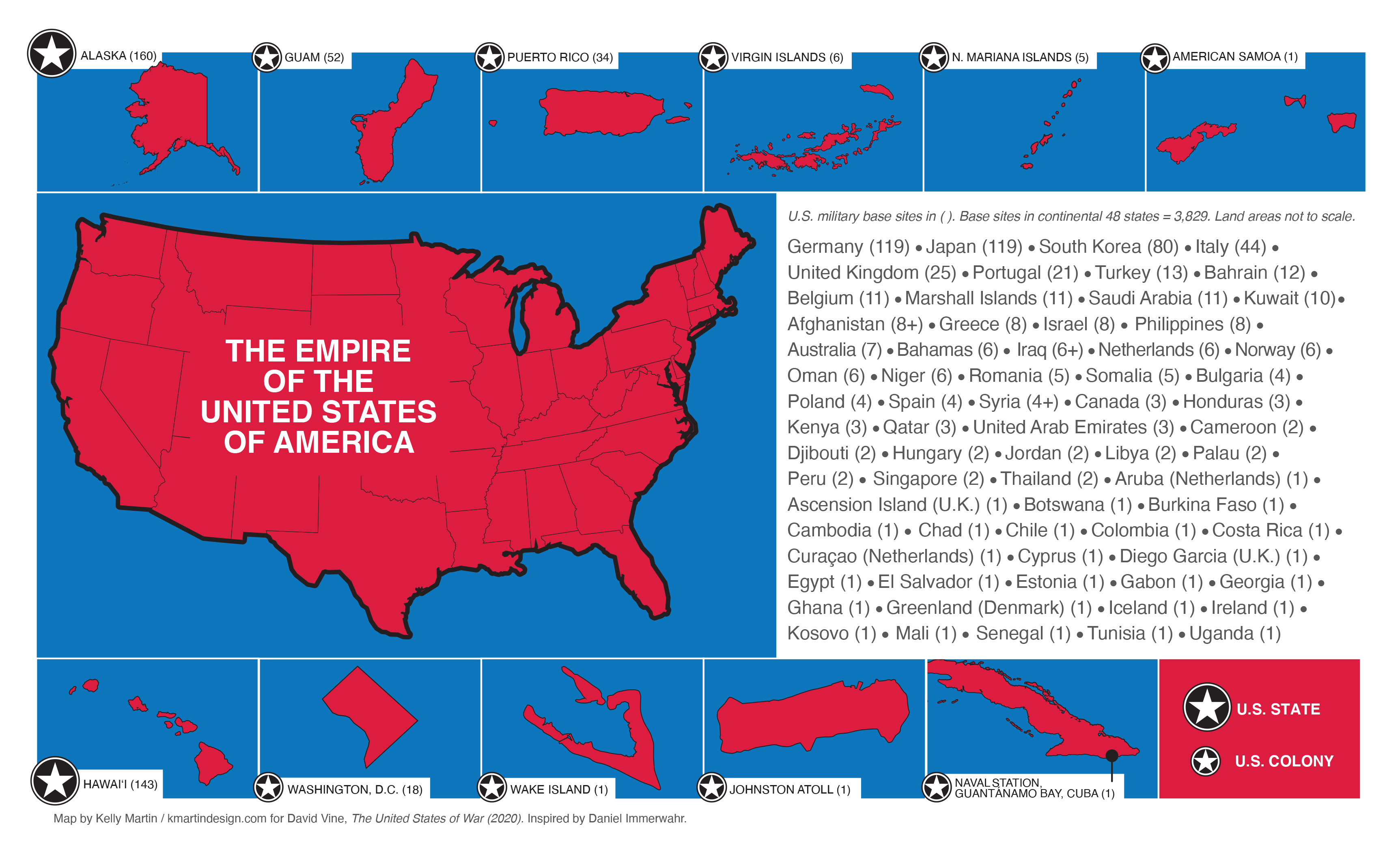



U.S. Wars, Bases, and Expansion Time Series Maps